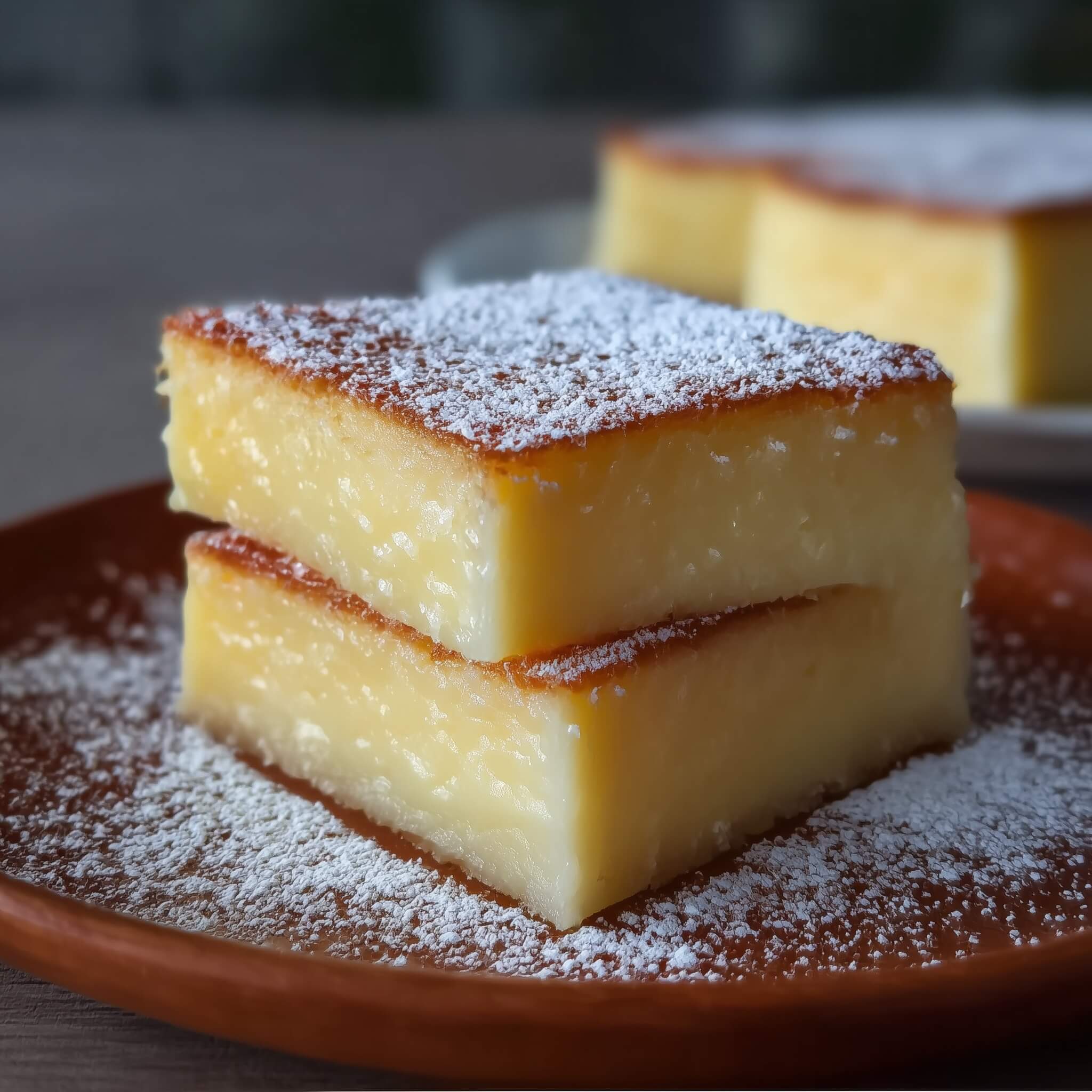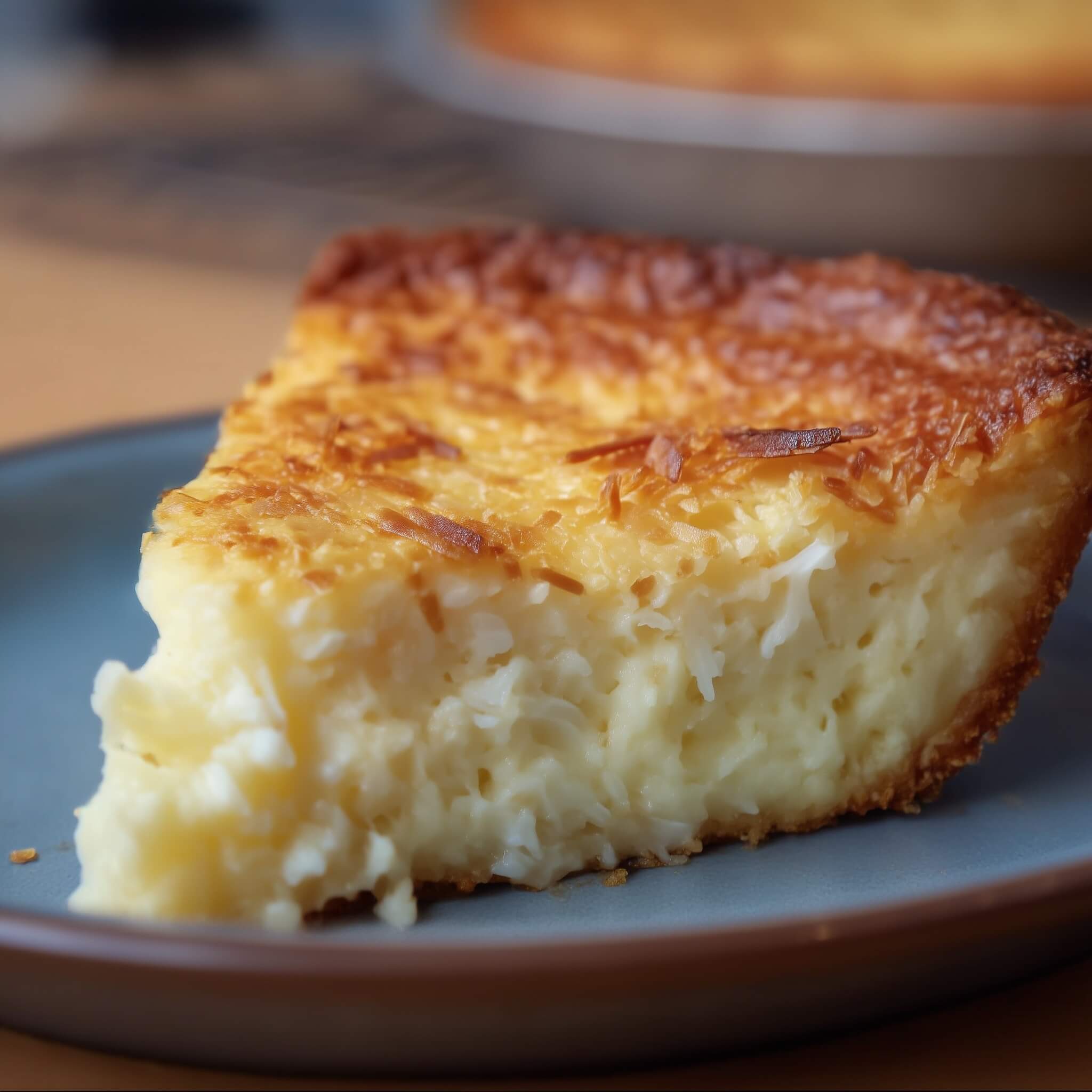
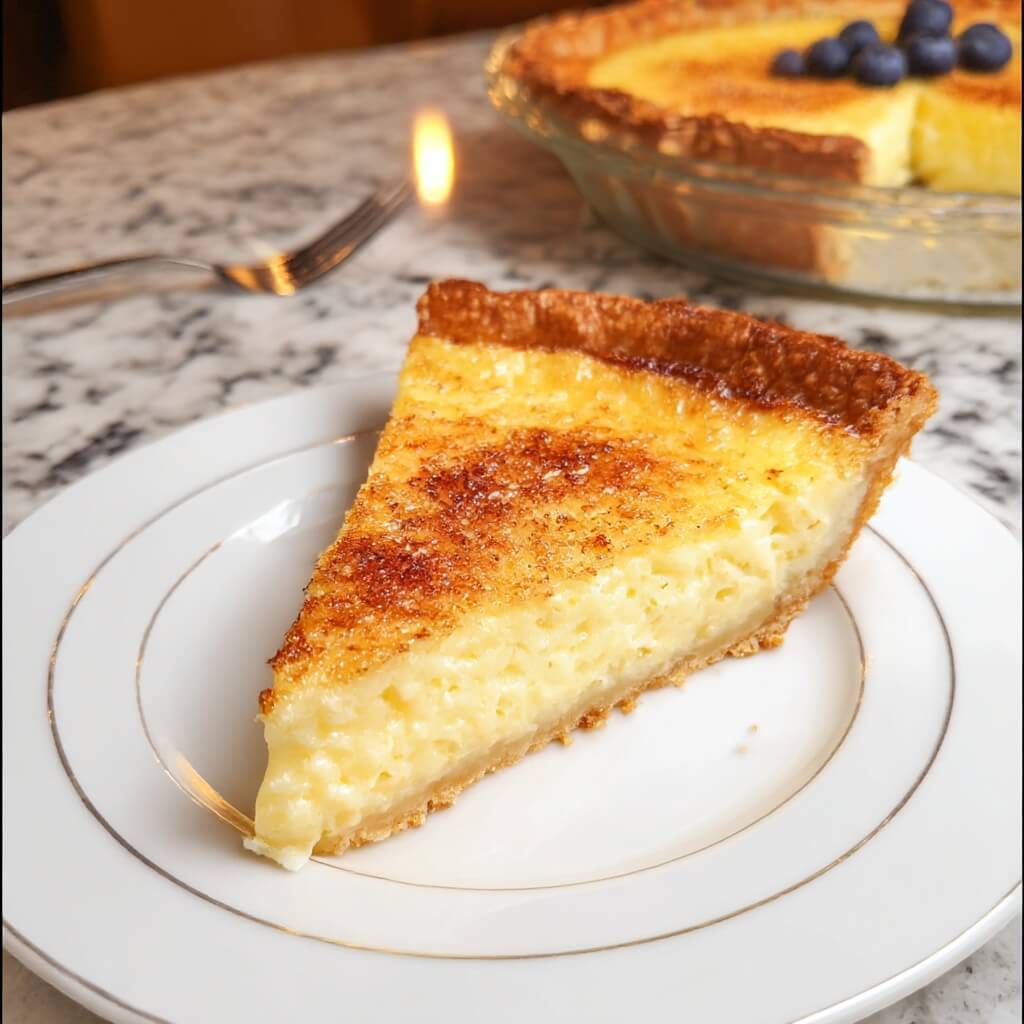
Custard pie is one of those desserts that doesn’t shout for attention. It just sits there, calm and simple, with a smooth pale filling and a little sprinkle of nutmeg on top. Then you take a bite and remember why it’s been around forever.
Soft, creamy, gently sweet. The texture is the whole point. It’s not pudding and it’s not cheesecake. It’s something in between, set enough to slice, still silky enough to melt on your tongue.
And the flavor? Classic. Vanilla, warm milk, eggs, a touch of butter, and that nutmeg finish that makes it taste like the pies you’d find at family gatherings, church dinners, and cozy holiday tables.
This is the kind of pie that feels right anytime you want a homemade dessert without layers, frosting, or decorating. It’s also a great “bake it once, enjoy it all week” treat. The slices hold up beautifully in the fridge, and it tastes even better after it chills.
If custard pie has ever cracked on you, curdled, or turned watery, don’t worry. It’s not hard. It just needs a little gentle handling, the right temperature, and a few small details that make a big difference.
Let’s make it the old fashioned way. Smooth custard. Flaky crust. No drama.
Frequently asked questions
Can I use a store-bought crust
Yes. It works great.
If you want the pie to taste more homemade, blind bake the crust. That one step makes a noticeable difference in texture.
Do I have to blind bake
You don’t have to, but I recommend it.
Custard filling is thin going into the oven. Without a head start, crust can stay pale and soft on the bottom.
If you skip blind baking, bake the pie on a preheated baking sheet and expect the crust to be softer.
Why does my custard taste eggy
Usually it’s one of these:
-
too many eggs
-
overbaking
-
very high oven temp
Custard should taste like vanilla milk with gentle warmth from nutmeg, not like scrambled eggs.
Stick to the egg amount in the recipe card and pull the pie while it still has a little jiggle.
Can I make this pie ahead
Yes, and it’s actually better that way.
Bake it the day before and chill overnight. The custard sets fully, the flavors settle, and the slices look cleaner.
How do I get the smoothest top
A few tricks:
-
don’t whip a lot of air into the custard
-
skim foam before baking
-
bake gently and don’t overbake
-
cool slowly, then chill
That’s it. Simple steps, smooth results.
Can I use nutmeg inside the custard
You can add a tiny pinch, but I prefer it on top.
Nutmeg on top gives that classic look and a light aroma when you take a bite. Inside the custard, it can taste muddier.
Ingredients
I’ve included notes and helpful info below for each ingredient. For the exact measurements, scroll down to the recipe card at the bottom of this post.
Pie crust
You can use:
-
1 homemade 9-inch pie crust (my favorite for flavor and texture)
-
1 refrigerated pie crust (easy and reliable)
-
1 frozen deep-dish crust (handy, but watch bake time since it’s thicker)
Old fashioned custard pie is simple, so the crust really shows. A buttery crust makes the whole pie taste richer.
If your crust tends to get soggy, don’t stress. I’ll show you how to keep it crisp.
Eggs
Custard pie is basically eggs + dairy, gently baked until set.
Use large eggs. Too many eggs can make the custard taste “eggy” and bake up rubbery. Too few eggs and it won’t set properly. This recipe hits that sweet spot where the custard is smooth and sliceable.
Granulated sugar
Custard pie is lightly sweet. It’s not meant to taste like frosting.
If you like a sweeter pie, you can add a couple extra tablespoons of sugar. If you like it less sweet, pull back slightly. I’ll share what changes when you adjust it in the tips section.
Milk and cream
Traditional custard pie is often made with milk. Some versions use half-and-half or a mix of milk and cream.
I like a blend. It gives you that classic flavor, but with a richer mouthfeel and a softer, silkier set.
More on choosing dairy in the next section.
Butter
A little melted butter adds flavor and a smooth finish. It’s subtle, but it makes the custard taste more “pie shop” and less like plain baked custard.
Vanilla extract
Custard needs vanilla. It’s the main flavor note besides nutmeg.
If you have vanilla bean paste, you can use it. If you have a vanilla bean, even better. But regular vanilla extract works perfectly.
Salt
A small amount of salt keeps the sweetness balanced and makes the vanilla taste stronger.
Ground nutmeg
Old fashioned custard pie practically requires nutmeg on top.
Freshly grated nutmeg is amazing if you have it. Ground nutmeg is still great. Either way, don’t pile it on. A light sprinkle is enough.
Optional: flour or cornstarch
Classic custard pie doesn’t always use a thickener. It relies on eggs to set.
That said, a small amount of flour or cornstarch can help stabilize the custard and reduce weeping (that little watery layer some custards get after chilling). I include it as optional, because some people want the most traditional version possible.
If you’ve struggled with custard texture before, use the thickener. It helps.
Best milk and cream for custard pie
This is one of the biggest choices in the recipe, and it changes the texture.
Here’s the quick breakdown:
-
Whole milk: classic flavor, lighter custard, still creamy.
-
2% milk: works, but the custard can feel thinner and set a little firmer.
-
Half-and-half: richer, very smooth, sets beautifully.
-
Heavy cream: very rich and soft, but can feel heavy if you use too much.
My favorite mix for a balanced old fashioned custard pie:
-
mostly whole milk, plus a smaller amount of half-and-half.
You get tradition and richness in the same slice. The custard sets clean, but still feels silky.
If you only have milk, don’t let that stop you. Use milk and keep everything else the same. The pie will still be delicious.
Pie crust options
Option 1: Homemade crust
If you love a flaky, buttery crust, go homemade. The pie doesn’t have many ingredients, so the crust flavor really stands out.
Option 2: Refrigerated crust
This is the easiest route and it works well. Just make sure to:
-
let it come to room temperature for a few minutes so it doesn’t crack
-
crimp the edges well so the custard doesn’t sneak under the crust while baking
Option 3: Frozen deep-dish crust
This can be convenient, especially around holidays.
Two notes:
-
Deep dish holds more custard, so the bake time can be longer.
-
The crust edges can brown fast, so use foil around the rim if needed.
Instructions
I’ve included step-by-step instructions below so this pie is easy to make at home. For exact ingredient amounts, scroll to the recipe card at the bottom of this post.
1) Preheat the oven
Preheat the oven to 350°F.
Place a baking sheet on the middle rack while the oven heats. You’ll bake the pie on the hot baking sheet. That bottom heat helps the crust cook through and stay crisp.
Small step. Big payoff.
2) Prep the crust
Fit your pie crust into a 9-inch pie dish. Crimp the edges.
If using a refrigerated crust, press it gently into the corners so there are no air gaps. That’s where soggy crust likes to hide.
3) Blind bake (recommended)
Custard pie can make crust soggy if the crust doesn’t get a head start.
To blind bake:
-
Line the crust with parchment paper.
-
Fill with pie weights or dry beans.
-
Bake for 10–12 minutes.
-
Remove parchment and weights, then bake 5 more minutes.
You’re not baking it fully here. You’re just setting the crust so it can handle the custard.
Let the crust cool slightly while you mix the filling.
4) Warm the milk mixture
In a saucepan over medium heat, warm the milk (and half-and-half if using) just until it’s steaming and hot to the touch.
Do not boil.
Boiling can change the texture and makes it harder to temper the eggs smoothly.
Remove the pan from the heat.
5) Mix the custard base
In a large bowl, whisk together the eggs, sugar, salt, and optional flour/cornstarch (if using).
Whisk until it looks smooth and slightly lighter in color.
Add vanilla and melted butter. Whisk again.
6) Temper the eggs
This is the step that keeps the filling silky.
Slowly pour a small amount of the hot milk into the egg mixture while whisking constantly. Start with about ½ cup.
Then slowly pour in the rest of the milk, whisking the whole time.
This warms the eggs gently. No scrambling. No lumps.
7) Fill the crust
Pour the custard into the partially baked crust.
If you see foam on top, skim it off with a spoon for the smoothest finish.
Sprinkle nutmeg lightly over the top.
8) Bake
Place the pie dish on the hot baking sheet in the oven.
Bake for 35–45 minutes, until the custard is mostly set with a slight jiggle in the center.
If the crust edge starts browning too quickly, cover just the edge with foil.
9) Cool, then chill
Let the pie cool at room temperature for 1 hour.
Then refrigerate for at least 4 hours, ideally overnight.
Custard pie slices best when it’s fully chilled. The texture tightens up in the fridge in the best way.
How to tell when custard pie is done
Custard doesn’t behave like cake. A toothpick test isn’t very helpful.
Instead, use these signs:
-
The outer edges look set and slightly puffed.
-
The center still has a gentle wobble, like set gelatin.
-
If you tap the pie dish, the whole pie shouldn’t slosh. Only the center should move slightly.
If you bake until it’s totally firm in the oven, it can overbake. Overbaked custard often cracks, turns grainy, or weeps liquid after chilling.
Pull it when it still has that soft jiggle in the middle. It will finish setting as it cools.
Recipe tips
Use room temp eggs
Cold eggs + hot milk can be a rough combo. Room temp eggs temper more smoothly.
If you forget, place the eggs in a bowl of warm water for 5 minutes. Easy fix.
Whisk, but don’t whip
You want everything combined. You don’t want a bowl full of air bubbles.
Extra bubbles float to the top and can leave a foamy layer after baking. Whisk steadily, not aggressively.
Don’t skip the baking sheet
A hot baking sheet under the pie helps the bottom crust cook evenly.
It also makes moving the pie in and out of the oven safer. Custard is liquid going in. You want stability.
Protect the crust edge
Custard pies bake long enough that crust edges can get too dark.
A ring of foil around the edge is all you need. Put it on when you notice browning, not from the start. You still want some color.
If your custard cracks
Cracks usually mean overbaking or oven temperature running hot.
Next time:
-
check the pie earlier
-
pull it when the center still jiggles
-
consider using an oven thermometer if your bakes tend to run fast
Even with a crack, the pie still tastes great. Chill it, slice it, serve it. Nobody complains.
If your custard weeps
That watery layer can happen for a few reasons:
-
overbaking
-
rapid temperature change
-
too much moisture in the custard structure
A small amount of flour or cornstarch helps stabilize things. So does avoiding a hard boil on the milk.
And chilling the pie uncovered for the first hour in the fridge can help prevent condensation from dripping onto the surface.
Variations
Old fashioned custard pie is perfect as is, but you can switch it up without losing the classic feel.
Cinnamon custard pie
Add ½ teaspoon cinnamon to the custard mixture, then still sprinkle nutmeg on top.
Warm, cozy, and slightly spicier.
Coconut custard pie
Stir ¾ cup sweetened shredded coconut into the custard before pouring it into the crust.
It adds texture and a sweet coconut flavor that pairs well with vanilla custard.
Lemon custard pie
Add 1 tablespoon lemon zest and 2 tablespoons lemon juice.
It turns the flavor brighter and cuts through the richness, while still feeling old school.
Extra rich version
Swap more of the milk for half-and-half.
It makes the custard softer and richer. Great for special occasions. A little heavy for everyday, but sometimes that’s exactly what you want.
No crust custard (baked custard)
Pour the custard into buttered ramekins and bake in a water bath until set.
Not a pie, but the same comforting flavor. Smooth and simple.
What to serve it with
Custard pie doesn’t need much. It’s already creamy and sweet.
But if you want to dress it up:
-
Fresh whipped cream (light, classic)
-
Berries (adds freshness and color)
-
A dusting of extra nutmeg right before serving
-
A drizzle of caramel if you want a richer finish
If you’re serving it after a big meal, smaller slices are perfect. Custard pie is gentle, but it still feels like a real dessert.
Storage and freezing
Refrigerator
Cover the pie and store it in the fridge for up to 4 days.
Custard pie is best cold. The texture stays smooth, and the slices stay neat.
Freezing
You can freeze custard pie, but the texture can change slightly after thawing. Some custards stay smooth, others get a tiny bit watery.
If you want to freeze it anyway:
-
Chill the pie completely.
-
Wrap slices individually in plastic wrap, then foil.
-
Freeze up to 1 month for best texture.
-
Thaw overnight in the fridge.
For the best experience, I treat custard pie as a fridge dessert, not a freezer dessert.
Old Fashioned Custard Pie
Ingredients
PIE
- 1 unbaked 9-inch pie crust homemade, refrigerated, or frozen
- 3 large eggs
- ¾ cup granulated sugar
- ¼ teaspoon salt
- 2 ½ cups whole milk or 2 cups whole milk + ½ cup half-and-half
- 2 tablespoons unsalted butter melted and slightly cooled
- 2 teaspoons vanilla extract
- 1 tablespoon all-purpose flour or 2 teaspoons cornstarch optional, for extra stability
- ¼ teaspoon ground nutmeg for topping, more or less to taste
Instructions
- Preheat the oven to 350°F. Place a baking sheet on the middle rack to preheat.
- Fit the pie crust into a 9-inch pie dish and crimp the edges.
- Blind bake (recommended): line the crust with parchment, fill with pie weights or dry beans, and bake 10–12 minutes. Remove weights and parchment and bake 5 minutes more. Let cool slightly.
- Warm the milk (and half-and-half if using) in a saucepan until steaming. Do not boil. Remove from heat.
- In a large bowl, whisk eggs, sugar, salt, and optional flour/cornstarch until smooth. Whisk in melted butter and vanilla.
- Temper the eggs: slowly whisk in about ½ cup hot milk, then slowly whisk in the remaining milk.
- Pour the custard into the pie crust. Skim foam if needed. Sprinkle nutmeg lightly over the top.
- Bake on the hot baking sheet for 35–45 minutes, until edges are set and the center has a gentle jiggle. If the crust edge browns too quickly, cover the rim with foil.
- Cool at room temp 1 hour, then refrigerate at least 4 hours (overnight is best) before slicing.
Notes