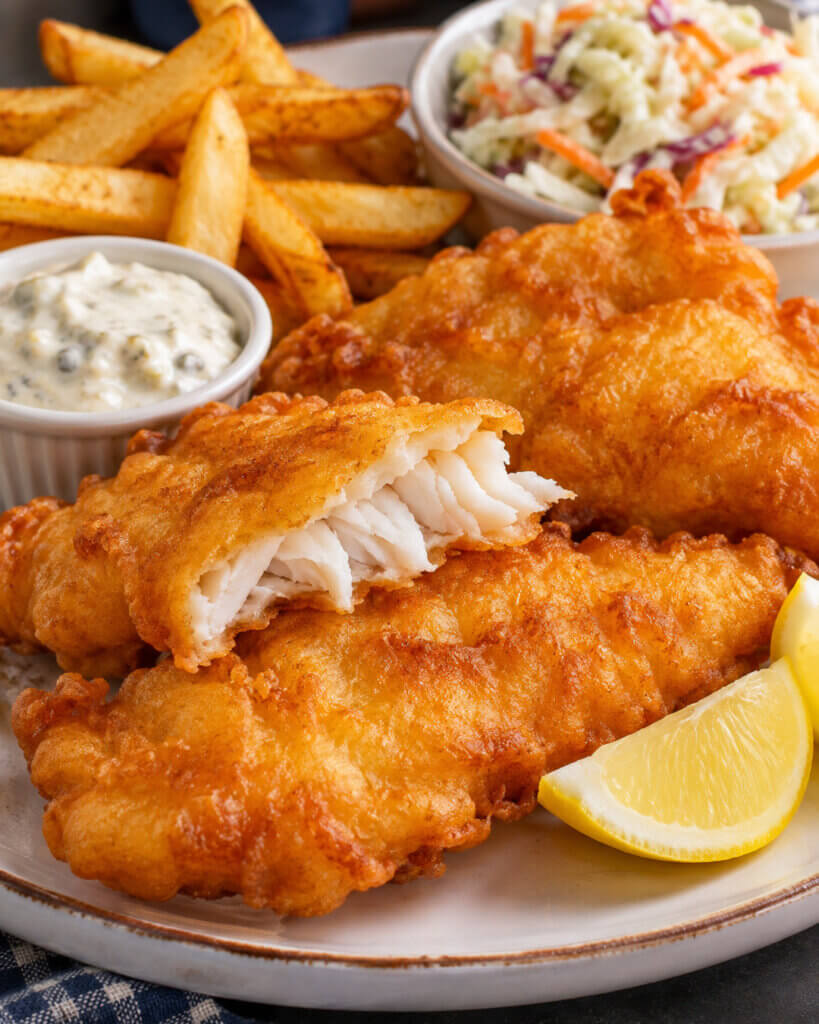
Make the best Homemade Long John Silver’s-Style Battered Fried Fish with this easy, delicious recipe! Tender white fish fillets are coated in a light, crispy batter and fried until perfectly golden brown. Every bite has a crunchy outside and soft, flaky fish inside. Serve it with homemade tartar sauce, crispy French fries, and a few lemon wedges for a delicious fish dinner that tastes like your favorite restaurant-style fried fish!
If you love crispy battered fish, you’re going to fall in love with this homemade recipe!
We’re talking golden, crunchy pieces of fish with a light, airy batter that breaks apart when you take a bite.
And underneath that crispy coating? Perfectly tender, flaky white fish.
So good!
I love making restaurant-style recipes at home, especially when they use simple ingredients and don’t require complicated cooking techniques.
This battered fried fish is one of those recipes that looks impressive but is actually pretty easy to prepare.
The secret is using a combination of all-purpose flour, cornstarch, baking powder, and ice-cold club soda.
That combination creates a light batter that becomes crispy and golden when it hits the hot oil.
Cornstarch helps give the coating a delicate crunch, while the carbonation in the club soda creates little air pockets in the batter.
And the baking powder helps make it even lighter!
For this recipe, I like using cod, pollock, or haddock. These mild white fish varieties have a delicious flavor that works perfectly with the crispy coating.
The fish is lightly dredged in seasoned flour, dipped into the cold batter, and carefully lowered into hot oil.
After just a few minutes, the outside becomes beautifully golden, while the fish stays moist and tender.
One of my favorite things about this recipe is how delicious it is served fresh from the fryer.
Add a sprinkle of salt, a squeeze of fresh lemon juice, and a spoonful of tartar sauce.
You don’t need much else!
But if you want to make it a complete meal, serve it with French fries, coleslaw, hush puppies, or your favorite potato side dish.
I’ve also included tips for keeping the batter crispy, choosing the best fish, frying at the correct temperature, and reheating leftovers.
This homemade recipe is inspired by the crispy battered fish served at Long John Silver’s. It isn’t the restaurant’s official recipe, but it’s designed to give you that same delicious combination of crunchy coating and tender fish right in your own kitchen.
Why you’ll love this recipe
There are so many reasons to love this Homemade Long John Silver’s-Style Battered Fried Fish! It’s easy to make, packed with flavor, and perfect for a family dinner.
- The batter is incredibly crispy. A combination of all-purpose flour, cornstarch, baking powder, and cold club soda creates a golden coating that’s light and crunchy instead of heavy or greasy.
- The fish stays tender and flaky. Mild white fish cooks quickly inside the batter, creating a delicious contrast between the crispy outside and soft center.
- You only need simple ingredients. Most of the batter ingredients are probably already in your pantry. Just pick up fresh or frozen white fish and a bottle of club soda!
- It’s ready in about 35 minutes. Once the oil is hot, the fish only needs a few minutes to fry. It’s a great option when you’re craving a homemade seafood dinner without spending hours in the kitchen.
- It’s perfect with your favorite sides. Serve the fish with French fries, tartar sauce, coleslaw, hush puppies, or roasted potatoes for a delicious restaurant-style meal.
I also love that you can adjust the seasonings to make the batter your own.
Add a little cayenne pepper for heat, extra garlic powder for a more savory flavor, or smoked paprika for a slightly smoky taste.
What makes this fried fish so crispy?
The batter is what makes this recipe special!
Traditional battered fish uses a mixture of flour and liquid to create a coating around the fillets.
For this recipe, I recommend using a few additional ingredients to make the coating lighter and crispier.
The first is cornstarch.
Cornstarch creates a delicate, crisp texture when fried. Combining it with all-purpose flour gives the coating enough structure to stick to the fish without becoming overly thick.
Next comes baking powder.
Baking powder helps the batter develop a slightly airy texture as it cooks.
And finally, there’s cold club soda!
The bubbles in the club soda help create little air pockets in the batter, while its cold temperature helps limit gluten development during mixing.
The result is a coating that becomes golden and crunchy when fried.
There’s another important step I highly recommend.
Keep the batter cold until you’re ready to fry!
I like preparing the dry ingredients first, then adding the club soda right before the fish goes into the oil.
This helps preserve the carbonation and keeps the batter from becoming too thick while sitting.
Once the fish is coated, it should go directly into the hot oil.
You don’t want to let battered fillets sit around for several minutes before frying.
For the crispiest results, dip and fry one batch at a time.
Ingredients
Here I explain the best ingredients for this battered fried fish recipe, what each one does, and substitution options. For the exact ingredient measurements, see the recipe card at the bottom of this post.
White fish fillets
You’ll need 1½ pounds of boneless, skinless white fish fillets.
I recommend using cod, pollock, or haddock.
All three have a mild flavor and a flaky texture that works beautifully with crispy batter.
I especially love cod because the fillets are thick enough to hold their shape during frying.
Pollock is another great option and is often more affordable.
Haddock also works well if you prefer its slightly firmer texture and delicate flavor.
Cut the fish into approximately 3-inch to 4-inch pieces.
I recommend keeping the pieces relatively uniform so they cook evenly.
All-purpose flour
You’ll need 1½ cups of all-purpose flour, divided.
One cup goes into the batter, while the remaining ½ cup is used to lightly coat the fish before dipping.
This initial flour coating helps the wet batter stick to the fillets.
Without it, the batter can sometimes slide off the moist surface of the fish.
All-purpose flour also provides structure so the coating holds together during frying.
Cornstarch
You’ll need ⅓ cup of cornstarch.
Cornstarch is one of my favorite ingredients for making crispy fried foods.
It helps create a lighter coating with a delicate crunch.
I recommend using it in combination with flour rather than replacing all of the flour.
The two work together to create a batter that sticks to the fish and fries beautifully.
Baking powder
You’ll need 1 teaspoon of baking powder.
Baking powder helps the batter puff slightly as it cooks.
This gives the coating a lighter texture and prevents it from becoming too dense.
Make sure your baking powder is fresh.
Older baking powder may not provide the same lift.
Club soda
You’ll need 1 cup of ice-cold club soda, plus an additional 1-2 tablespoons if needed.
This is one of the most important ingredients in the recipe!
The carbonation helps create a light, airy batter.
I recommend keeping the club soda in the refrigerator until you’re ready to mix it with the dry ingredients.
You can also place it in the freezer for approximately 10 minutes before using, but don’t allow it to freeze.
Plain sparkling water can be substituted.
Just avoid flavored sparkling water because it may change the taste of the batter.
Paprika
You’ll need 1 teaspoon of paprika.
Paprika adds a mild savory flavor and helps give the batter a beautiful golden color.
I recommend regular sweet paprika for this recipe.
You can substitute smoked paprika if you’d like a slightly smoky flavor.
Garlic powder
You’ll need ¾ teaspoon of garlic powder, divided.
Garlic powder adds a delicious savory flavor without overpowering the fish.
Use ½ teaspoon in the batter and ¼ teaspoon in the flour coating.
I love using garlic powder because it mixes evenly into the dry ingredients.
Onion powder
You’ll need ½ teaspoon of onion powder.
Onion powder adds another layer of savory flavor that pairs perfectly with the fish.
It works especially well with the garlic powder and paprika.
Kosher salt
You’ll need 1 teaspoon of kosher salt, divided, plus a little extra for finishing.
Use ¾ teaspoon in the batter and ¼ teaspoon in the flour coating.
Salt helps season the batter and brings out the natural flavor of the fish.
You can adjust the final seasoning after frying.
I recommend sprinkling a little salt over the fish while the coating is still hot.
Black pepper
You’ll need ½ teaspoon of freshly ground black pepper.
Black pepper adds a mild warmth that complements the other seasonings.
If you prefer a stronger pepper flavor, add another pinch.
Vegetable oil
You’ll need approximately 4-6 cups of vegetable or canola oil, depending on the size of your pot.
Use enough oil to reach a depth of approximately 2 inches.
I recommend a neutral oil suitable for frying, such as canola, vegetable, or peanut oil.
The exact amount isn’t as important as having enough depth for the fish to cook evenly.
Make sure the pot is large enough that the oil doesn’t fill more than halfway up the sides.
For serving
Fresh lemon wedges, tartar sauce, French fries, and coleslaw are all delicious with this crispy fried fish.
I especially love serving a few lemon wedges on the side!
The bright lemon juice balances the rich, crunchy batter.
What’s the best fish for battered fried fish?
For this recipe, my first choice is cod.
Cod has a mild flavor and a firm, flaky texture that works beautifully with a crispy coating.
It also comes in relatively thick fillets, making it easy to cut into restaurant-style pieces.
Pollock is another great choice.
It has a similar mild flavor and is often more affordable than cod.
If you’re making a large batch for the family, pollock is definitely worth considering.
Haddock is also delicious.
It has a delicate flavor and flakes nicely once cooked.
You can also use tilapia, although the fillets tend to be thinner.
If using tilapia, reduce the frying time and check the fish earlier to prevent overcooking.
I recommend avoiding fish with a very strong flavor for this particular recipe.
The goal is to let the crispy batter and mild white fish work together.
Can you use frozen fish?
Absolutely!
Frozen cod, pollock, or haddock works well as long as it’s completely thawed before frying.
I recommend thawing frozen fish overnight in the refrigerator.
Once thawed, remove it from the packaging and pat the fillets thoroughly dry.
This step is especially important with frozen fish because it can release additional moisture.
Excess water makes it harder for the batter to stick and can cause the hot oil to splatter.
Never place frozen fish directly into hot frying oil.
For the best results, use completely thawed, well-dried fillets.
How to cut the fish for frying
I recommend cutting the fish into pieces approximately 3-4 inches long and 1-2 inches wide.
The exact shape will depend on the fillets you’re using.
Thicker cod fillets can be cut into rectangular portions, while thinner pollock fillets may create slightly flatter pieces.
That’s perfectly fine!
Try to keep the thickness relatively consistent.
For this recipe, pieces approximately ¾-inch to 1 inch thick work especially well.
If the fish is much thicker, it may need additional frying time.
If it’s thinner, it will cook more quickly.
I also recommend removing any pin bones before battering.
Run your fingers gently along the surface of the fillet to check for bones, then remove them with clean kitchen tweezers.
Once the fish is cut, pat every piece dry with paper towels.
The drier the surface, the better the flour coating will stick.
Instructions
I’ve included step-by-step instructions below to make this recipe super easy to follow at home. For the full detailed recipe instructions and exact ingredient quantities, scroll to the recipe card at the bottom of this post.
You’ll need a large heavy-bottomed pot, a frying thermometer, two mixing bowls, a whisk, and a wire cooling rack.
I recommend preparing all of your ingredients before heating the oil.
Once frying begins, everything moves pretty quickly!
Step 1. Prepare the fish
Start by checking the fish fillets for any remaining bones.
Cut the fish into approximately 3-inch to 4-inch pieces.
Try to keep the pieces relatively uniform in thickness.
Place them on a paper towel-lined plate.
Use additional paper towels to pat the fish thoroughly dry.
This is one of the most important steps!
Moisture on the surface can prevent the batter from sticking properly.
Set the prepared fish aside while you mix the seasonings.
Step 2. Make the seasoned flour coating
In a shallow bowl, combine ½ cup of all-purpose flour, ¼ teaspoon of garlic powder, and ¼ teaspoon of kosher salt.
Stir until evenly mixed.
This flour mixture will be used to lightly dredge the fish before adding the wet batter.
I recommend keeping the coating thin.
You don’t want a thick layer of dry flour underneath the batter.
The goal is simply to create a dry surface that helps the batter cling to the fish.
Step 3. Combine the dry batter ingredients
In a large mixing bowl, add 1 cup of all-purpose flour and ⅓ cup of cornstarch.
Next, add 1 teaspoon of baking powder, 1 teaspoon of paprika, ½ teaspoon of garlic powder, ½ teaspoon of onion powder, ¾ teaspoon of kosher salt, and ½ teaspoon of black pepper.
Whisk until everything is evenly combined.
You want the cornstarch, baking powder, and seasonings distributed throughout the flour.
Set the bowl aside.
Don’t add the club soda just yet!
I recommend waiting until the oil is nearly ready so the batter stays cold and bubbly.
Step 4. Heat the frying oil
Pour approximately 2 inches of vegetable oil into a large heavy-bottomed pot.
Make sure the oil doesn’t rise more than halfway up the pot.
Place the pot over medium heat.
Heat the oil to 350°F.
I highly recommend using a deep-frying thermometer.
Maintaining the correct oil temperature is one of the secrets to crispy fried fish.
If the oil is too cool, the batter can absorb excess oil and become greasy.
If it’s too hot, the coating may brown before the fish is fully cooked.
Keep the oil close to 350°F throughout the frying process.
Step 5. Make the cold batter
Once the oil is nearly ready, remove the club soda from the refrigerator.
Pour 1 cup of ice-cold club soda into the bowl of dry batter ingredients.
Whisk gently until the flour mixture is just combined.
The batter should be similar in consistency to a slightly thick pancake batter.
It should coat a spoon but still drip off easily.
If the mixture is too thick, add another tablespoon or two of cold club soda.
Don’t overmix!
A few small lumps are perfectly fine.
Overmixing can make the batter tougher and cause some of the carbonation to escape.
For the best texture, use the batter immediately after mixing.
Step 6. Dredge the fish
Take one piece of prepared fish and place it in the seasoned flour mixture.
Turn it gently until both sides are lightly coated.
Lift the fish and shake off any excess flour.
You should have a thin, even layer.
Repeat with a few more pieces of fish, depending on how many will fit in the pot.
I recommend working in small batches rather than coating all of the fish at once.
Step 7. Dip the fish into the batter
Place one floured piece of fish into the cold batter.
Use a fork or tongs to gently turn it until completely coated.
Lift the fish from the batter and allow a little excess to drip back into the bowl.
You want the fish coated in a generous layer of batter, but not so thick that large amounts fall off before frying.
The batter should cling to the entire fillet.
Carefully move the coated fish toward the pot.
Step 8. Fry the battered fish
Using tongs, carefully lower the coated fish into the hot oil, placing it away from you to reduce splashing.
Don’t drop the fish from above the oil.
Add only 2-3 pieces at a time, depending on the size of your pot.
Fry for approximately 4-6 minutes total, turning carefully halfway through if needed.
The batter should become golden brown and crispy.
The exact cooking time depends on the thickness of the fish and the oil temperature.
I recommend checking the thickest piece with an instant-read thermometer.
Fish should reach an internal temperature of 145°F.
Once the coating is golden and the fish is cooked through, carefully remove it from the oil.
Step 9. Drain on a wire rack
Transfer the cooked fish to a wire cooling rack placed over a rimmed baking sheet.
I recommend using a wire rack instead of placing the fish directly on a plate.
The rack allows excess oil to drip away and helps prevent steam from softening the crispy coating.
Sprinkle the hot fish lightly with additional salt, if desired.
Repeat with the remaining fish, allowing the oil to return to approximately 350°F between batches.
This helps every piece cook evenly.
Step 10. Keep the fish warm
If you’re making several batches, preheat the oven to 200°F.
Place the cooked fish on an oven-safe wire rack set over a baking sheet.
Keep it in the warm oven for a short time while you finish frying.
Avoid covering the fish with foil.
The trapped steam can soften the batter.
I also recommend not stacking the pieces.
Give them a little space so the coating stays crispy.
Step 11. Serve the fried fish
Transfer the golden battered fish to a large serving platter.
Add lemon wedges, tartar sauce, and your favorite sides.
I love serving this fish with crispy French fries and creamy coleslaw.
You can also add hush puppies for a delicious seafood dinner.
Serve immediately while the batter is crunchy and the fish is still hot.
Every bite should have a crispy golden shell with soft, flaky fish inside!
Recipe tips
This Homemade Long John Silver’s-Style Battered Fried Fish is easy to make, but I’ve included a few important tips to help you get the best results every time.
Use mild white fish. Cod, pollock, and haddock are great choices because they have a delicate flavor and flaky texture.
Pat the fish completely dry. Excess moisture can make the batter slide off or cause the oil to splatter.
Use a flour coating before battering. A light dredge in seasoned flour helps the wet batter stick to the fish.
Keep the club soda cold. Cold carbonated water helps create a lighter batter.
Don’t overmix the batter. Stir until the ingredients are just combined. A few small lumps are fine.
Make the batter right before frying. The carbonation gradually escapes as the batter sits, so it’s best used fresh.
Maintain the oil at 350°F. This helps the coating become crispy without absorbing too much grease.
Fry in small batches. Adding too much fish at once lowers the oil temperature and can make the coating soggy.
Use a thermometer to check the fish. The thickest part should reach 145°F.
Drain on a wire rack. This helps preserve the crispy coating.
Serve immediately. Like most fried seafood, battered fish tastes best when it’s fresh from the fryer.
How to keep the batter from falling off
One of the most common problems when making battered fried fish is the coating slipping off during frying.
Luckily, there are a few simple ways to prevent this!
First, make sure the fish is completely dry.
Fresh and thawed fish both contain moisture, and that moisture can prevent the batter from gripping the surface.
I recommend patting the fillets with paper towels immediately before coating them.
Next, don’t skip the seasoned flour.
A thin layer of flour helps absorb surface moisture and provides something for the batter to stick to.
After dredging, gently shake off the extra flour.
You don’t want large patches of loose flour between the fish and batter.
Another important tip is getting the oil hot enough before adding the fish.
When the batter enters properly heated oil, it begins setting around the fillet.
If the oil is too cool, the coating may slide or become soggy before it has a chance to crisp.
I also recommend avoiding unnecessary movement during the first minute of frying.
Give the coating time to set before gently turning the fish.
And don’t crowd the pot!
The pieces need enough space to cook without sticking to each other.
How to prevent greasy fried fish
Nobody wants fried fish with a heavy, oily coating!
The goal is a crispy exterior that tastes light and crunchy.
And the most important thing is oil temperature.
I recommend frying at approximately 350°F.
When the oil is hot enough, the batter cooks quickly and develops a golden crust.
If the temperature drops too low, the coating can absorb additional oil before it becomes crispy.
This is why I recommend frying only a few pieces at a time.
Adding several cold fish fillets to the pot can lower the temperature significantly.
A thermometer makes it easy to see when the oil needs a little time to heat back up.
Another helpful trick is using a thick, heavy-bottomed pot.
Heavy cookware holds heat more evenly, helping prevent large temperature swings.
I also recommend lifting the fish from the oil with a slotted spoon or tongs and allowing excess oil to drip back into the pot.
Then transfer the fish to a wire rack.
Avoid stacking the hot fillets on paper towels.
The steam trapped underneath can soften the crispy coating.
For the best results, serve the fish shortly after frying.
Can you use sparkling water instead of club soda?
Absolutely!
Plain sparkling water works well in this recipe.
The important thing is using a cold, carbonated liquid.
The bubbles help create a lighter batter, while the cold temperature helps keep the coating from becoming overly dense.
Club soda is my first choice because it’s easy to find and has a mild flavor.
You can also use plain seltzer water.
I don’t recommend using sweetened or flavored sparkling water.
Those drinks may contain ingredients that change the flavor of the batter or cause it to brown differently.
If you don’t have carbonated water, you can use cold regular water.
The fish will still fry, but the coating may be slightly less airy.
For the crispiest homemade version, I recommend sticking with cold club soda.
Can you make beer-battered fish instead?
Yes!
Beer is another popular ingredient for crispy fried fish batter.
You can replace the club soda with 1 cup of cold beer.
A light lager or mild beer is generally a good choice because it doesn’t overpower the flavor of the fish.
The carbonation helps create a crisp coating, while the beer adds a slightly different flavor.
Keep in mind that some alcohol may remain after frying.
For an alcohol-free family dinner, I recommend the original club soda version.
It creates a delicious crispy coating without needing beer.
Recipe variations
One of my favorite things about this recipe is how easy it is to change the seasonings.
The original version has a mild, savory flavor, but there are plenty of ways to make it your own.
Spicy battered fried fish
If you like a little heat, add ¼ teaspoon of cayenne pepper to the dry batter ingredients.
You can also add a pinch of crushed red pepper flakes.
The extra spice pairs beautifully with the crispy coating.
I recommend serving this version with a spicy tartar sauce or a little hot sauce on the side.
Garlic pepper fried fish
For a stronger savory flavor, increase the garlic powder in the batter to 1 teaspoon.
Add another ¼ teaspoon of freshly ground black pepper.
This creates a delicious garlic and pepper coating that’s especially good with lemon wedges.
Cajun-style battered fish
If you love Cajun seasoning, replace the paprika, garlic powder, onion powder, and black pepper with approximately 2 teaspoons of your favorite Cajun seasoning blend.
Check the salt content before adding the full amount of kosher salt.
Some Cajun seasoning mixes already contain plenty of salt.
Serve with a spicy dipping sauce for a delicious seafood dinner.
Crispy battered fish sandwiches
This fried fish is perfect for making sandwiches!
Place a piece of freshly fried fish on a toasted sandwich bun.
Add shredded lettuce, sliced pickles, and a generous spoonful of tartar sauce.
You can also add a slice of cheese if you like.
I love serving these sandwiches with French fries or coleslaw.
Battered fish tacos
For a fun dinner, cut the fish into smaller strips before frying.
Once cooked, place the crispy fish inside warm tortillas.
Top with shredded cabbage, pico de gallo, and a creamy lime sauce.
The crispy batter is delicious with the fresh vegetables and citrus flavors.
Battered fried chicken
You can use a similar batter to make crispy fried chicken pieces.
I recommend using boneless chicken breast or chicken tenders cut into evenly sized strips.
Pat the chicken dry, dredge in seasoned flour, and dip into the batter.
Fry in small batches, adjusting the cooking time as needed.
Chicken must reach an internal temperature of 165°F.
Because chicken generally needs longer to cook than fish, monitor the coating and oil temperature carefully.
The finished chicken is delicious served with honey mustard or your favorite dipping sauce.
Frequently asked questions
What kind of fish is best for this recipe?
I recommend cod, pollock, or haddock.
These varieties have mild flavors and flaky textures that work well with crispy batter.
Cod is my first choice because the fillets are often thick enough to create substantial pieces of fried fish.
Pollock is another great option when you’re looking for a more affordable alternative.
Why is my fried fish batter not crispy?
There are a few possible reasons.
The oil may not have been hot enough, the batter may have been overmixed, or the fish may have contained too much moisture.
I recommend drying the fish thoroughly, using cold club soda, and frying at approximately 350°F.
Also make sure to drain the fish on a wire rack after frying.
Why does the batter fall off the fish?
This usually happens when the fish is too wet or the batter doesn’t have a dry surface to cling to.
Pat the fillets dry before dredging.
Coat them lightly in seasoned flour, then dip into the batter.
I also recommend allowing the coating to set in the hot oil before turning the fish.
Can you make the batter ahead of time?
I recommend preparing the dry ingredients ahead of time, but waiting to add the club soda until just before frying.
The carbonation begins escaping once the liquid is mixed into the flour.
If the batter sits for too long, it can become heavier.
For the best crispy texture, mix the batter fresh.
Can you use self-rising flour?
You can experiment with self-rising flour, but you’ll need to adjust the baking powder and salt because self-rising flour already contains both.
For the most consistent results, I recommend using regular all-purpose flour with the measurements listed in the recipe.
Can you make battered fish without cornstarch?
Yes, but the texture will be slightly different.
You can replace the cornstarch with additional all-purpose flour.
The coating will still become golden when fried, but it may be a little heavier.
I recommend using cornstarch for the lightest, crispiest result.
What temperature should you fry battered fish?
I recommend frying at 350°F.
This temperature allows the batter to become golden and crispy while the fish cooks through.
Use a thermometer to monitor the oil temperature between batches.
If the oil becomes too hot, reduce the heat slightly.
If it drops too low, allow it to return to 350°F before adding more fish.
How do you know when fried fish is done?
The coating should be golden brown and crispy.
The fish inside should be opaque and flake easily with a fork.
For the safest and most accurate results, use an instant-read thermometer.
The thickest part of the fish should reach 145°F.
Can you make this recipe gluten free?
Yes, with some adjustments.
Replace the all-purpose flour with a gluten-free flour blend suitable for frying.
You’ll also want to use certified gluten-free cornstarch, baking powder, and seasonings as needed.
The texture may vary depending on the flour blend.
I recommend frying one test piece before cooking the entire batch.
Can you double the recipe?
Absolutely!
This is a great recipe to double when you’re feeding a crowd.
Use 3 pounds of fish and double the batter ingredients.
I recommend mixing the dry batter ingredients in advance, then preparing the wet batter in smaller batches.
This keeps the club soda cold and bubbly.
Fry the fish in small batches, allowing the oil to return to the proper temperature each time.
What to serve with battered fried fish
This crispy fried fish is delicious with so many different side dishes!
I love serving it as part of a classic fish-and-chips dinner, but there are plenty of other options.
French fries are one of my favorite pairings. Crispy, salted fries taste wonderful with golden battered fish and tartar sauce.
Coleslaw is another classic choice. The cool, creamy cabbage adds a refreshing contrast to the hot, crunchy fish.
Hush puppies are perfect for a restaurant-style seafood meal. Their slightly sweet cornmeal flavor pairs beautifully with fried fish.
Macaroni and cheese is another delicious side if you want a hearty comfort-food dinner.
Roasted potatoes are a great alternative to French fries.
Green beans add a fresh vegetable side that balances the richness of the fried fish.
Corn on the cob is especially delicious during the summer.
And don’t forget the lemon wedges!
A little fresh lemon juice adds a bright flavor that complements the crispy coating.
Easy homemade tartar sauce
If you’re making crispy battered fish, I highly recommend serving it with tartar sauce.
And it’s incredibly easy to prepare at home!
You’ll only need a few simple ingredients.
Combine ½ cup of mayonnaise, 2 tablespoons of finely chopped dill pickles, 1 teaspoon of fresh lemon juice, and 1 teaspoon of Dijon mustard.
Add 1 tablespoon of finely chopped fresh parsley and a pinch of black pepper.
Stir until everything is well combined.
Taste the sauce and adjust the lemon juice or pickles if needed.
Refrigerate for approximately 15 minutes before serving.
The creamy, tangy sauce is perfect for dipping crispy fried fish.
I especially love adding a little extra chopped pickle for more texture.
You can prepare the tartar sauce ahead of time and keep it refrigerated until dinner.
How to make it ahead of time
This fried fish is best enjoyed fresh, but you can prepare several components in advance.
Start by cutting the fish into evenly sized pieces.
Place the fish in an airtight container and refrigerate until you’re ready to cook.
Keep it cold and use it within the recommended safe storage time for fresh seafood.
You can also combine all of the dry batter ingredients ahead of time.
Store them in an airtight container.
Prepare the seasoned flour coating separately.
If you’re serving homemade tartar sauce, make it ahead and refrigerate.
When you’re ready to cook, heat the oil and mix the cold club soda into the dry batter ingredients.
Then dredge, dip, and fry the fish.
I don’t recommend coating the fish with wet batter several hours in advance.
The batter can soften and slide off before cooking.
For the best texture, fry immediately after dipping.
How to store and reheat leftovers
One of the best things about this recipe is how delicious the fried fish tastes when it’s fresh.
But if you have leftovers, you can store them and reheat them for another meal.
How to store fried fish
Allow the fried fish to cool slightly.
Transfer it to a shallow airtight container and refrigerate within 2 hours of cooking.
Store leftover fish in the refrigerator for up to 3-4 days.
I recommend placing parchment paper between pieces if you need to stack them.
Keep in mind that the batter will soften in the refrigerator.
For the best flavor and texture, I recommend enjoying the leftovers within the first 1-2 days.
How to reheat in the oven
My favorite way to reheat fried fish is in the oven.
Preheat the oven to 375°F.
Place the fish on a wire rack over a baking sheet.
Heat for approximately 10-15 minutes, depending on the thickness, until hot throughout.
For food safety, reheat leftovers to 165°F.
The wire rack allows hot air to circulate around the fish and helps restore some of the crispy texture.
How to reheat in the air fryer
An air fryer is another great option!
Preheat the air fryer to 350°F.
Arrange the fish in a single layer in the basket.
Heat for approximately 4-7 minutes, checking frequently, until hot throughout and the coating becomes crispy again.
Don’t overcrowd the basket.
A little space between the pieces helps the hot air circulate.
Can you microwave fried fish?
You can, but I don’t recommend it if you want a crispy coating.
The microwave heats the fish quickly, but the batter tends to become soft.
For the best texture, use the oven or air fryer instead.
Can you freeze battered fried fish?
Yes!
Allow the cooked fish to cool completely.
Arrange the pieces in a single layer on a parchment-lined baking sheet.
Freeze until firm, then transfer them to freezer-safe containers or bags.
Freeze for up to 2 months for the best quality.
When you’re ready to serve, reheat the fish in the oven from frozen until thoroughly hot and the center reaches 165°F.
The coating may not be quite as crispy as freshly fried fish, but the oven helps restore some of the texture.
More easy seafood dinner ideas
If you love this Homemade Long John Silver’s-Style Battered Fried Fish, there are so many other delicious seafood recipes to try!
Crispy fish sandwiches are perfect for a casual dinner. Golden fried fish is served on toasted buns with lettuce, pickles, and creamy tartar sauce.
Homemade fish and chips is another classic favorite. Crispy battered fish and golden French fries are served with lemon wedges and dipping sauce.
Garlic butter shrimp is perfect when you’re looking for a quick seafood dinner. Tender shrimp are cooked in garlic butter and served with rice or pasta.
Crispy fish tacos combine flaky fried fish with fresh cabbage, salsa, and a creamy lime sauce.
Baked Parmesan fish is another delicious option if you prefer using the oven. Mild white fish is coated with seasoned breadcrumbs and Parmesan cheese, then baked until golden.
Homemade hush puppies are a wonderful side dish for fried seafood. Small cornmeal fritters are fried until golden brown and served warm.
I love keeping a collection of easy seafood recipes that can be made at home with simple ingredients.
They’re perfect when you want something different from the usual chicken or beef dinner.
This Homemade Long John Silver’s-Style Battered Fried Fish is definitely one to save!
With a light, crispy coating and tender, flaky fish inside, it’s a delicious homemade version of a classic restaurant-style favorite.
Serve it hot, add plenty of French fries and tartar sauce, and finish with a squeeze of fresh lemon juice.
Such a delicious seafood dinner!
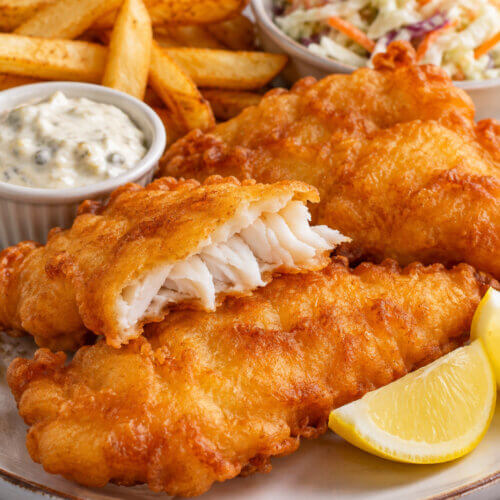
Long John Silver’s-Style Battered Fried Fish
Ingredients
For the fish
- 1½ pounds boneless skinless cod, pollock, or haddock fillets
- ½ cup all-purpose flour for dredging
- ¼ teaspoon garlic powder
- ¼ teaspoon kosher salt
For the crispy batter
- 1 cup all-purpose flour
- ⅓ cup cornstarch
- 1 teaspoon baking powder
- 1 teaspoon paprika
- ½ teaspoon garlic powder
- ½ teaspoon onion powder
- ¾ teaspoon kosher salt
- ½ teaspoon freshly ground black pepper
- 1 cup ice-cold club soda plus 1-2 tablespoons if needed
For frying
- 4-6 cups vegetable or canola oil or enough for approximately 2 inches of oil in a heavy-bottomed pot
- Additional salt for finishing
- Optional for serving
- Lemon wedges
- Tartar sauce
- French fries
- Coleslaw
- Hush puppies
Instructions
- Prepare the fish. Cut the fish into approximately 3-inch to 4-inch pieces. Check for bones and pat completely dry with paper towels.
- Make the flour coating. In a shallow bowl, combine ½ cup of all-purpose flour, ¼ teaspoon garlic powder, and ¼ teaspoon kosher salt. Mix well.
- Combine the dry batter ingredients. In a large bowl, whisk together 1 cup of flour, cornstarch, baking powder, paprika, ½ teaspoon garlic powder, onion powder, ¾ teaspoon kosher salt, and black pepper.
- Heat the oil. Pour approximately 2 inches of vegetable oil into a large heavy-bottomed pot, filling no more than halfway. Heat to 350°F.
- Make the batter. Pour 1 cup of ice-cold club soda into the dry batter ingredients. Whisk gently until just combined. Add another tablespoon or two of club soda if needed to create a thick but pourable batter. Don't overmix.
- Dredge the fish. Lightly coat each piece of fish in the seasoned flour mixture. Shake off excess flour.
- Dip into the batter. Place the floured fish in the cold batter and turn until completely coated. Allow excess batter to drip off.
- Fry the fish. Carefully lower 2-3 battered pieces into the 350°F oil. Fry for approximately 4-6 minutes total, turning gently if needed, until golden brown and crispy.
- Check for doneness. Use an instant-read thermometer to confirm the thickest part of the fish reaches 145°F.
- Drain. Remove the fish with a slotted spoon or tongs and transfer to a wire rack over a baking sheet. Sprinkle lightly with additional salt.
- Repeat. Continue frying the remaining fish in small batches, allowing the oil to return to 350°F between batches.
- Serve. Serve immediately with French fries, tartar sauce, coleslaw, and fresh lemon wedges.