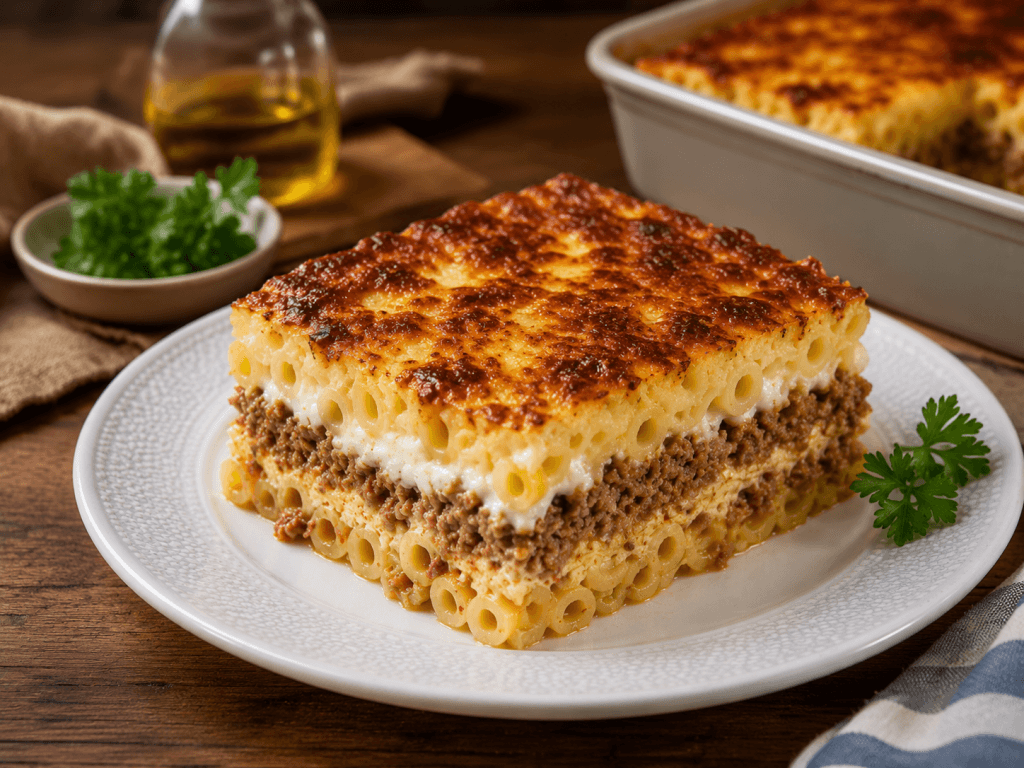
Pastitsio is one of those baked pasta dishes that feels special the second it comes out of the oven. The top is golden and creamy, the meat sauce smells warm and rich, and the pasta layer holds everything together in thick, beautiful slices.
If you’ve ever had Greek pastitsio before, you already know it’s not just another lasagna. It has its own flavor, its own texture, and its own cozy personality.
This recipe is made with layers of pasta, a thick beef and tomato sauce, and a creamy béchamel topping. The meat sauce is seasoned with cinnamon, oregano, garlic, and onion, which gives it that classic Greek flavor. It’s savory, a little warm from the spices, and so good tucked between pasta and creamy sauce.
The béchamel is what really makes pastitsio stand out. Instead of ricotta or cottage cheese, this Greek lasagna gets a thick, smooth white sauce made with butter, flour, milk, egg yolks, and cheese. It bakes into a soft, creamy topping that turns lightly golden on top.
This is a great recipe for Sunday dinner, holidays, potlucks, or anytime you want a big baked pasta dish that feeds a hungry table. It does take a little more time than a quick weeknight pasta, but none of the steps are hard. You’ll make the meat sauce, cook the pasta, whisk together the béchamel, layer everything in a baking dish, and let the oven do the rest.
And the leftovers? Even better the next day.
Why you’ll love this recipe
There’s a lot to love about a big pan of homemade pastitsio. It’s filling, rich, and packed with flavor, but it still uses simple ingredients you can find at most grocery stores.
The meat sauce is thick and hearty. The pasta is buttery and cheesy. The béchamel is creamy enough to feel extra special, but still simple to make at home.
This is also a wonderful make-ahead meal. You can make the meat sauce the day before, or assemble the entire dish earlier in the day and bake it when you’re ready. That makes it perfect for entertaining, because no one wants to be stuck in the kitchen whisking sauce while everyone else is sitting down to eat.
Pastitsio also slices beautifully after it rests. That might be the hardest part of the whole recipe, honestly. Waiting. But give it time, and you’ll get those clean, stacked layers that make this dish look as good as it tastes.
What is pastitsio?
Pastitsio is a traditional Greek baked pasta dish made with pasta, meat sauce, and béchamel. It’s often called Greek lasagna because it’s layered and baked in a casserole dish, but the taste is very different from Italian lasagna.
Instead of lasagna sheets, pastitsio is usually made with long tube-shaped pasta. Greek pastitsio pasta is the classic choice, but bucatini works really well if that’s what you can find. The pasta is tossed with butter, eggs, and grated cheese before it goes into the baking dish. This helps it hold together when the pastitsio is sliced.
The meat sauce is usually made with ground beef or lamb, tomatoes, onion, garlic, and warm spices. Cinnamon is the ingredient that gives the sauce its signature flavor. It shouldn’t taste sweet. It just adds warmth and depth to the beef.
The top layer is a thick béchamel sauce. It’s smooth, creamy, and finished with cheese and egg yolks so it bakes into a rich topping. When the dish is done, the top should be lightly golden, the edges should be bubbling, and the inside should be hot and saucy.
It’s comfort food, Greek style.
Ingredients
Here I explain the best ingredients for this pastitsio recipe, what each one does, and substitution options. For the exact ingredient measurements, see the recipe card at the bottom of this post.
Pasta
Pastitsio pasta – this is the traditional pasta used in this recipe. It’s long, hollow, and sturdy, which helps create that classic pasta layer. You can usually find it at Greek or Mediterranean markets.
Bucatini – this is my favorite easy substitute. It’s long like spaghetti, but hollow in the middle, so it gives a similar feel to traditional pastitsio pasta.
Penne or ziti – these are not traditional, but they work if you can’t find long hollow pasta. The slices won’t look quite the same, but the flavor will still be delicious.
Meat Sauce
Olive oil – used to cook the onion and garlic before adding the beef. It starts the sauce with good flavor.
Yellow onion – I like yellow onion in this recipe because it has a nice, balanced flavor. It softens into the sauce and adds a savory base.
Garlic – fresh garlic gives the best flavor. Use minced garlic cloves if possible.
Ground beef – I recommend 85/15 ground beef. It has enough fat for flavor, but not so much that the sauce becomes greasy. You can also use 80/20 ground beef and drain off some of the grease after browning.
Tomato paste – this makes the meat sauce richer and thicker. Let it cook with the beef for a minute or two before adding the tomatoes.
Crushed tomatoes – these create the body of the sauce. Crushed tomatoes work better than diced tomatoes because they make the sauce smoother and thicker.
Red wine – adds deep flavor to the sauce. If you don’t want to use wine, replace it with beef broth.
Beef broth – helps loosen the sauce just enough while it simmers. It also adds savory flavor.
Bay leaf – adds a subtle background flavor while the sauce cooks. Be sure to remove it before layering the dish.
Cinnamon – the classic spice in pastitsio meat sauce. It gives the beef a warm Greek flavor without making the sauce sweet.
Allspice – adds a little extra warmth. You only need a small amount.
Dried oregano – brings in that familiar Mediterranean flavor that goes so well with tomatoes and beef.
Salt and black pepper – to season the sauce.
Pasta Layer
Butter – melted butter coats the pasta and keeps it from sticking together.
Eggs – beaten eggs help bind the pasta layer so it slices nicely after baking.
Kefalotyri cheese – this is a traditional Greek cheese with a salty, sharp flavor. It’s wonderful in pastitsio.
Parmesan cheese – if you can’t find kefalotyri, parmesan is the easiest substitute. It has a salty, nutty flavor and works well in both the pasta layer and the béchamel.
Béchamel Sauce
Unsalted butter – used to start the roux. I like unsalted butter so the sauce doesn’t get too salty.
All-purpose flour – thickens the sauce. The béchamel should be thick enough to spread over the meat layer without sinking into it.
Whole milk – makes the sauce creamy and smooth. Warm the milk before adding it to the roux for the best texture.
Egg yolks – make the béchamel richer and help the sauce set as it bakes.
Cheese – kefalotyri or parmesan both work. The cheese adds saltiness and flavor to the creamy sauce.
Nutmeg – just a pinch. It gives the béchamel a classic flavor, but it should not overpower the dish.
Salt and white pepper – white pepper keeps the sauce light in color, but black pepper is fine if that’s what you have.
Instructions
This recipe has three main parts: the meat sauce, the pasta layer, and the béchamel sauce. It sounds like a lot, but each step is simple. Get everything ready before you start layering, and it comes together nicely.
Make the meat sauce
Heat olive oil in a large skillet or Dutch oven over medium heat.
Add the diced onion and cook for 4-5 minutes, stirring occasionally, until it softens. You don’t need to brown the onion. You just want it tender and fragrant.
Add the minced garlic and cook for 1 minute. Stir it often so it doesn’t burn.
Add the ground beef to the skillet. Break it up with a spatula as it cooks. Cook for 7-8 minutes, or until the beef is browned and no longer pink.
If there is a lot of grease in the skillet, drain it before moving on. A little bit left behind is fine and adds flavor.
Stir in the tomato paste. Let it cook with the beef for 1-2 minutes. This step helps the tomato paste taste richer and less sharp.
Pour in the red wine and scrape the bottom of the skillet with your spatula. All those little browned bits add flavor to the sauce. Let the wine simmer for 2-3 minutes.
Add the crushed tomatoes, beef broth, bay leaf, cinnamon, allspice, oregano, salt, and black pepper.
Stir everything together and bring the sauce to a gentle simmer.
Reduce the heat to low and let the sauce cook uncovered for 25-30 minutes. Stir it every so often. The sauce should become thick and rich. You don’t want it watery because a thin sauce can make the layers slide apart.
Remove the bay leaf and set the sauce aside.
Cook the pasta
Bring a large pot of salted water to a boil.
Add the pasta and cook it about 2 minutes less than the package directions. The pasta will continue cooking in the oven, so it should still have a little bite when you drain it.
Drain the pasta and return it to the warm pot.
Add the melted butter and toss until the pasta is coated.
Let the pasta cool for 5-10 minutes. Don’t skip this part. If the pasta is too hot, it can scramble the eggs.
Once it has cooled slightly, add the beaten eggs and grated cheese. Toss until the pasta is evenly coated.
The pasta will look glossy, cheesy, and a little sticky. That’s what you want. This helps the bottom layer hold together after baking.
Make the béchamel sauce
Warm the milk in a saucepan or microwave until hot, but not boiling.
In a large saucepan, melt the butter over medium heat. Sprinkle in the flour and whisk until smooth.
Cook the butter and flour mixture for 2 minutes, whisking the whole time. This removes the raw flour taste.
Slowly pour in the warm milk while whisking. Add it a little at a time at first. Once the sauce starts to smooth out, you can pour a little faster.
Keep whisking until the sauce thickens, about 6-8 minutes. It should coat the back of a spoon.
Remove the pan from the heat.
In a small bowl, whisk the egg yolks. Add a few spoonfuls of the warm sauce into the yolks while whisking. This gently warms the eggs so they don’t scramble.
Pour the egg mixture back into the saucepan and whisk until smooth.
Add the grated cheese, nutmeg, salt, and white pepper. Stir until the cheese melts and the sauce is thick and creamy.
If the sauce feels too thin, return it to low heat and whisk for another minute or two. It should be thick enough to spoon over the meat sauce.
Assemble the pastitsio
Preheat the oven to 350°F.
Grease a 9 inch by 13 inch baking dish with butter or cooking spray.
Spread the pasta mixture into the bottom of the baking dish. Use your hands or a spatula to press it into an even layer.
Spoon the meat sauce over the pasta. Spread it from edge to edge.
Pour the béchamel sauce over the meat layer. Smooth the top with a spatula.
Sprinkle extra grated cheese over the top.
At this point, it should already look good enough to eat. But wait until it bakes. That golden top is worth it.
Bake the pastitsio
Place the baking dish in the oven and bake for 45-50 minutes.
The top should be lightly golden and the edges should be bubbling. If you want a darker top, turn on the broiler for 1-2 minutes at the end. Watch it closely because the béchamel can brown quickly.
Remove the dish from the oven and let it rest for 20-30 minutes before slicing.
This resting time is important. The layers need time to settle. If you cut into it right away, it will still taste amazing, but the slices won’t hold together as well.
Recipe tips
Use the right pasta if you can. Traditional pastitsio pasta gives the dish its classic look and texture. Bucatini is the next best option.
Simmer the meat sauce until thick. The sauce should not be runny. A thick sauce gives you better layers and cleaner slices.
Warm the milk before making the béchamel. Cold milk can make the sauce clumpy. Warm milk blends into the roux much more smoothly.
Whisk the béchamel often. You don’t have to panic over it, but stay close to the stove. A few steady minutes of whisking gives you a smooth sauce.
Temper the egg yolks. Add warm sauce to the yolks slowly before mixing them into the pot. This keeps the eggs from scrambling.
Let the dish rest. This is the best trick for clean slices. Give the pastitsio at least 20 minutes before cutting.
Grate the cheese at home. Freshly grated cheese melts better and tastes better than pre-shredded cheese.
Make ahead instructions
You can make the meat sauce up to 3 days in advance. Let it cool, then store it in an airtight container in the refrigerator.
You can also assemble the entire dish up to 24 hours before baking. Cover the baking dish tightly and refrigerate it.
When you’re ready to bake, remove the dish from the fridge and let it sit on the counter for about 30 minutes while the oven preheats.
Bake as directed. If it’s still very cold when it goes into the oven, you may need to add 10-15 minutes to the baking time.
If the top starts browning too quickly, loosely cover the dish with foil.
How to store and reheat it
Store leftover pastitsio in an airtight container in the refrigerator for up to 5 days.
To reheat one slice, place it on a microwave-safe plate and microwave for 1-2 minutes, or until hot.
For the best texture, reheat slices in the oven. Place them in a baking dish, cover with foil, and warm at 325°F for 15-20 minutes.
Pastitsio also freezes well. Let it cool completely, then wrap individual slices tightly and freeze for up to 3 months.
Thaw overnight in the refrigerator before reheating.
What to serve with pastitsio
Pastitsio is rich and hearty, so I like to serve it with something fresh on the side.
A Greek salad is perfect. Crisp cucumbers, tomatoes, red onion, olives, and feta balance out the creamy pasta and beef sauce.
You can also serve it with roasted vegetables, lemon potatoes, green beans, or warm pita bread.
For a simple dinner, add a green salad with lemon vinaigrette. That bright, fresh flavor is so good next to the creamy béchamel.
Recipe variations
Use ground lamb. For a deeper flavor, replace some or all of the ground beef with ground lamb.
Use parmesan cheese. If you can’t find kefalotyri, parmesan works well in this recipe.
Skip the wine. Use beef broth instead of red wine.
Add more cheese. Sprinkle extra cheese between the pasta and meat sauce layer if you want it cheesier.
Use penne or ziti. Not traditional, but still delicious and easy to find.
Add a pinch of cloves. A tiny pinch adds more warm flavor to the meat sauce. Don’t add too much, because cloves can take over fast.
Frequently asked questions
Is pastitsio the same as lasagna?
No, but they are similar. Both are layered baked pasta dishes, but pastitsio uses tube-shaped pasta, a cinnamon-spiced meat sauce, and a creamy béchamel topping. Lasagna usually uses flat noodles and often includes ricotta or mozzarella.
What does pastitsio taste like?
Pastitsio tastes rich, savory, creamy, and lightly spiced. The cinnamon in the meat sauce gives it a warm flavor, but it does not make the dish sweet.
Can I make it without wine?
Yes. Replace the wine with beef broth. The sauce will still be flavorful.
Can I make pastitsio ahead of time?
Yes, and it’s a great dish to make ahead. You can prepare the meat sauce in advance or assemble the whole dish and refrigerate it before baking.
Why is my béchamel lumpy?
The milk may have been added too quickly, or the sauce may not have been whisked enough. Add warm milk slowly and whisk as you pour.
Can I freeze pastitsio?
Yes. You can freeze individual slices or the whole baked dish. Let it cool completely first, then wrap it tightly.
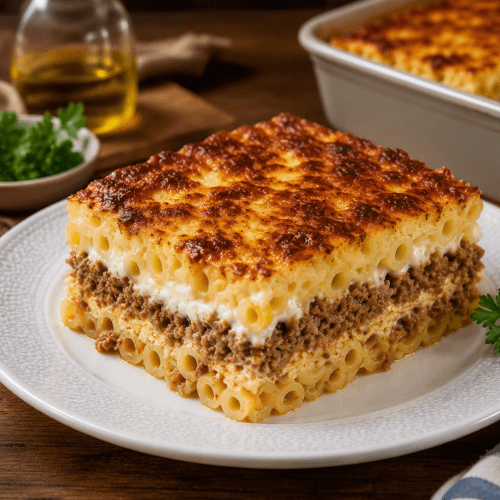
Authentic Pastitsio Greek Lasagna Recipe
Ingredients
For the meat sauce
- 2 tablespoons olive oil
- 1 large yellow onion diced
- 4 cloves garlic minced
- 2 pounds ground beef
- 3 tablespoons tomato paste
- ½ cup red wine or beef broth
- 1 can crushed tomatoes 28 ounces
- ½ cup beef broth
- 1 bay leaf
- 1 ½ teaspoons ground cinnamon
- ¼ teaspoon ground allspice
- 1 teaspoon dried oregano
- 1 ½ teaspoons salt
- ½ teaspoon black pepper
For the pasta layer
- 1 pound pastitsio pasta or bucatini
- 2 tablespoons unsalted butter melted
- 2 large eggs beaten
- 1 cup grated kefalotyri cheese or parmesan cheese
For the béchamel sauce
- ½ cup unsalted butter
- ½ cup all-purpose flour
- 4 cups whole milk warmed
- 4 large egg yolks
- 1 cup grated kefalotyri cheese or parmesan cheese
- ¼ teaspoon ground nutmeg
- 1 teaspoon salt
- ¼ teaspoon white pepper
For topping
- ¼ cup grated kefalotyri cheese or parmesan cheese
Instructions
- Heat olive oil in a large skillet or Dutch oven over medium heat. Add the diced onion and cook for 4-5 minutes, until softened.
- Add the garlic and cook for 1 minute.
- Add the ground beef and cook for 7-8 minutes, breaking it apart as it cooks, until browned. Drain excess grease if needed.
- Stir in the tomato paste and cook for 1-2 minutes.
- Pour in the red wine and simmer for 2-3 minutes, scraping the bottom of the skillet.
- Add the crushed tomatoes, beef broth, bay leaf, cinnamon, allspice, oregano, salt, and pepper.
- Reduce the heat to low and simmer uncovered for 25-30 minutes, stirring occasionally, until thick. Remove the bay leaf.
- Bring a large pot of salted water to a boil. Cook the pasta 2 minutes less than the package directions. Drain and return it to the pot.
- Toss the pasta with melted butter and let it cool for 5-10 minutes.
- Add the beaten eggs and grated cheese to the pasta. Toss until evenly coated.
- Melt butter in a large saucepan over medium heat. Add the flour and whisk until smooth. Cook for 2 minutes.
- Slowly pour in the warm milk, whisking constantly. Cook for 6-8 minutes, until thickened.
- Remove from the heat. Whisk the egg yolks in a small bowl. Slowly whisk a few spoonfuls of warm sauce into the yolks, then whisk the yolk mixture back into the béchamel.
- Stir in the cheese, nutmeg, salt, and white pepper.
- Preheat the oven to 350°F. Grease a 9 inch by 13 inch baking dish.
- Spread the pasta mixture evenly into the bottom of the baking dish.
- Spoon the meat sauce over the pasta and spread it into an even layer.
- Pour the béchamel over the meat sauce and smooth the top.
- Sprinkle the remaining grated cheese on top.
- Bake for 45-50 minutes, until golden on top and bubbling around the edges.
- Let the pastitsio rest for 20-30 minutes before slicing and serving.
Notes
Parmesan cheese can be used instead of kefalotyri.
The meat sauce should be thick before layering.
Let the pastitsio rest before slicing for clean layers.
Store leftovers in the refrigerator for up to 5 days.