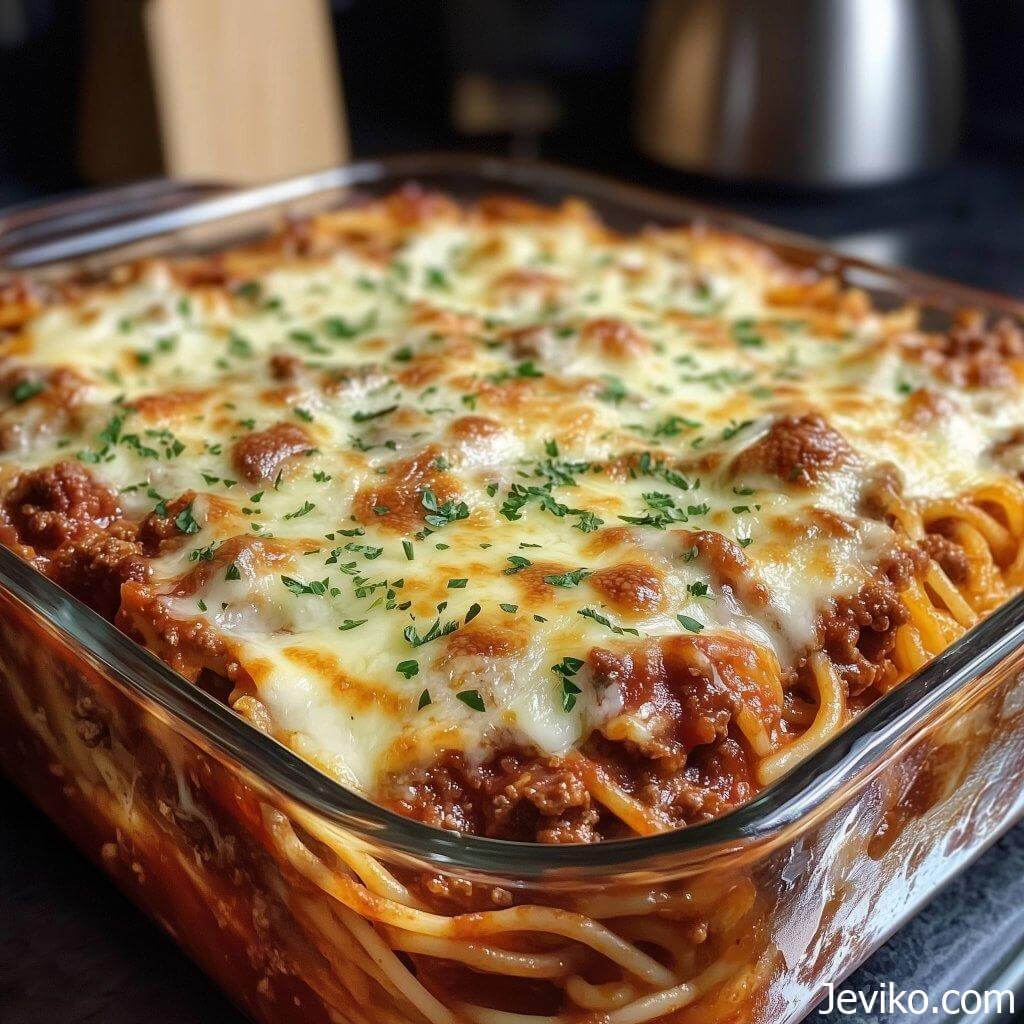
This casserole is pure comfort food.
It has everything people want in a baked pasta dinner: spaghetti, a hearty meat sauce, a thick and creamy cheese layer, then a blanket of melted mozzarella on top. The edges get slightly crisp. The center stays rich and creamy. And the leftovers? Even better the next day.
It’s called “million dollar” because it tastes like you went all out, even though it’s made with everyday ingredients. No fancy techniques. No complicated steps. Just smart layering and the right balance of flavors.
This is also a great recipe when you need something reliable.
Feeding a crowd? It stretches nicely. Need a make-ahead dinner? It holds up in the fridge. Want a freezer meal you’ll actually be excited to reheat? This is the one.
Grab a big baking dish. You’re about to make a pan of spaghetti that disappears fast.
Frequently asked questions
Why is it called “million dollar spaghetti”?
Because it tastes rich and special. The creamy layer is the whole point. It turns basic spaghetti into a casserole that feels like something you’d bring to a gathering.
Cottage cheese sounds odd. Will I taste it?
Not in a “cottage cheese” way.
Once baked, it melts into the creamy layer and tastes mild and rich. If you’re unsure, use ricotta. It’s the smoothest swap.
Can I assemble it the night before?
Yes.
Assemble, cover tightly, refrigerate, then bake the next day. If it goes into the oven cold, add a little extra covered bake time so the center heats through.
Can I use leftover spaghetti?
You can, but the texture may be softer.
If the spaghetti is already fully cooked, bake the casserole just until hot and bubbly (don’t overbake or the pasta can get too soft). Adding an extra spoonful of sauce can help keep it from drying out.
How do I keep it from getting watery?
A few tips:
-
drain the meat well
-
simmer the sauce so it thickens
-
don’t overdo extra watery veggies unless you sauté them first (mushrooms especially)
Those little steps keep the casserole rich and sliceable.
Ingredients:
I’ve included notes and descriptions below for each ingredient in this recipe. For the exact ingredient measurements, jump to the recipe card at the bottom of this post.
Spaghetti
Classic spaghetti noodles are traditional, but you have options.
-
Spaghetti: the original, perfect for layering.
-
Thin spaghetti: a little softer after baking, still great.
-
Bucatini: thicker noodles with a great bite.
-
Angel hair: works in a pinch, but it’s easy to overcook, so watch it closely.
One key move: cook the pasta just to al dente. It keeps the casserole from turning mushy after baking.
Ground beef (or sausage)
Ground beef keeps this recipe simple and familiar. Italian sausage adds extra flavor.
-
Use lean ground beef if you want less grease.
-
Use 80/20 if you want richer flavor (just drain well).
-
Use Italian sausage (mild or hot) for a bolder taste.
You can also do a mix of beef and sausage. Half and half is a good balance.
Onion and garlic
These build flavor fast.
Dice the onion small so it melts into the sauce. Use fresh garlic if you can. It makes the whole casserole taste more “home-cooked.”
Marinara sauce (or pasta sauce)
Pick a sauce you already like. This recipe doesn’t need anything fancy.
If your sauce is on the sweet side, you can balance it with a pinch of salt and a little black pepper. If it’s very acidic, a tiny pinch of sugar helps.
Tomato paste (optional, but recommended)
A couple tablespoons of tomato paste thickens the sauce and gives it a deeper tomato flavor. It also helps the casserole slice cleaner.
Seasonings
This is the simple blend that works every time:
-
Italian seasoning
-
salt and black pepper
-
crushed red pepper flakes (optional)
-
garlic powder (optional, for extra savory flavor)
Butter (for the spaghetti layer)
This is one of the “million dollar” details.
Tossing the drained spaghetti with melted butter helps it stay tender and adds richness to every bite. It also keeps the pasta from clumping in the dish.
Cream cheese
Cream cheese is the base of the creamy layer. It adds tang, richness, and structure.
Let it soften before mixing so it blends smoothly.
Sour cream
Sour cream makes the creamy layer lighter and easier to spread. It also adds that little tang that keeps everything from tasting heavy.
Cottage cheese or ricotta
This is where you get that classic creamy baked pasta texture.
-
Cottage cheese: traditional in many versions of this recipe, slightly tangy and super creamy once baked.
-
Ricotta: smoother, a little richer, mild flavor.
Either works. Choose what you like.
Mozzarella and parmesan
Mozzarella gives you that gooey melted top layer. Parmesan adds salty, savory flavor.
Grating your own mozzarella melts better than pre-shredded (pre-shredded cheese often has anti-caking ingredients that can affect melting). That same idea shows up in the reference posts too.
Parsley (optional)
A little chopped parsley in the creamy layer or sprinkled on top adds freshness and makes the casserole feel less heavy.
Instructions:
I’ve included step by step instructions below to make this recipe super easy to follow at home. For the full detailed recipe instructions and ingredient quantities, scroll to the recipe card at the bottom of this post.
1) Prep the oven and pan
Preheat the oven to 350°F.
Lightly grease a 9 x 13-inch baking dish. This size gives you enough room for clean layers and easy serving.
2) Cook the spaghetti
Bring a large pot of salted water to a boil.
Cook the spaghetti 1–2 minutes less than the package directions. You want it al dente.
Drain the spaghetti, then toss it with melted butter (and a pinch of salt, if you want). Set it aside.
3) Make the meat sauce
Place a large skillet on the stove over medium-high heat.
Add the ground beef and diced onion. Cook, crumbling the meat, until the beef is no longer pink.
Drain any excess grease. This matters. Too much grease can make the casserole feel heavy and can create a greasy layer around the edges.
Add the garlic and stir for 30 seconds.
Stir in the marinara sauce and tomato paste (if using). Add Italian seasoning, salt, pepper, and red pepper flakes if you like a little heat.
Reduce the heat to low and simmer for 5–10 minutes. This quick simmer helps the flavors come together and thickens the sauce slightly.
4) Mix the “million dollar” creamy layer
In a mixing bowl, combine the softened cream cheese, sour cream, and cottage cheese (or ricotta).
Add parmesan, a pinch of salt, and a little black pepper. Stir until smooth and creamy.
If your cream cheese is stubborn, use a hand mixer for 30–60 seconds. A smooth layer spreads easier, and it bakes more evenly.
5) Layer the casserole
Now the fun part.
-
Layer 1: Spread about half of the spaghetti in the baking dish.
-
Layer 2: Add half of the meat sauce and spread it evenly.
-
Layer 3: Spread all of the creamy layer on top of the meat sauce.
-
Layer 4: Add the remaining spaghetti.
-
Layer 5: Top with the remaining meat sauce.
-
Finish: Sprinkle mozzarella over the top, then add a little extra parmesan if you want.
Take your time when spreading the creamy layer. It’s thick. Use a spatula and do small sections until it’s even.
6) Bake
Cover the dish with foil and bake for 25 minutes.
Remove the foil and bake for 10–15 minutes more, or until the cheese is melted and bubbly.
If you want a more golden top, broil for 1–2 minutes at the end. Stay close. Cheese can go from perfect to too dark fast.
7) Rest, slice, serve
Let the casserole rest for 10–15 minutes before serving.
That rest time helps the layers set, so you get cleaner slices and less sliding on the plate.
Recipe tips
Don’t overcook the spaghetti
This is the biggest one.
The pasta keeps cooking in the oven, especially around the edges. Al dente spaghetti means the casserole stays tender, not soft.
Drain the meat well
A greasy sauce can make the whole casserole feel heavy.
After cooking the beef, drain it well before adding the sauce. You’ll taste the difference.
Soften the cream cheese
Cold cream cheese won’t mix smoothly.
Let it sit at room temperature while you cook the meat sauce. By the time you’re ready to mix, it’s usually soft enough to stir easily.
Want cleaner slices?
Two small moves help a lot:
-
simmer the sauce so it thickens
-
rest the casserole before cutting
If you cut too soon, the layers haven’t had time to settle.
Make it extra cheesy (without changing the texture)
Add ½ cup shredded mozzarella into the creamy layer. Then top the casserole as written.
You get more cheese flavor in every bite, not just on top.
Make it ahead without dry edges
If you’re prepping it ahead and baking later, keep it covered tightly. When you bake it, start with foil on top, then uncover near the end so the cheese melts and browns.
Recipe variations
This casserole is classic as written, but it’s also easy to adjust.
Make it spicy
Use hot Italian sausage instead of ground beef, and add crushed red pepper flakes to the sauce.
A little heat with that creamy layer is so good.
Add veggies
Stir one of these into the meat sauce while it simmers:
-
chopped mushrooms
-
diced bell peppers
-
zucchini (small dice)
-
baby spinach (stir in at the end until wilted)
Veggies make it feel a little lighter, and they stretch the recipe even more.
Make it with chicken
Swap the ground beef for shredded cooked chicken and use a marinara you love.
It’s not traditional, but it’s a tasty twist if you’re not in the mood for beef.
Make it meatless
Skip the meat and add sautéed mushrooms, diced zucchini, and spinach. Use a thick marinara and keep the creamy layer as written.
Still hearty. Still satisfying.
Swap the cheese layer
Not into cottage cheese? Use ricotta.
Want extra tang? Add ½ cup more sour cream and reduce the cottage cheese slightly.
Make it gluten free
Use gluten-free spaghetti. Cook it very carefully (gluten-free pasta can go from perfect to overcooked fast).
Everything else stays the same.
What to serve it with
This casserole is rich, so sides that are fresh or crisp work best.
Here are easy pairings:
-
a simple green salad with a tangy dressing
-
roasted broccoli or green beans
-
sautéed zucchini with garlic and lemon
-
garlic bread (because baked pasta + garlic bread makes sense)
If you’re feeding a big group, add a veggie side and a salad and you’ve got a full meal that feels complete.
Storage and reheating
Any leftover casserole should be stored in the refrigerator, covered, and it will stay good for several days.
How long will leftovers stay good?
Leftovers will stay good, stored in an airtight container, in the fridge for up to 4–5 days.
How to reheat it
Oven (best for texture):
Place a portion in an oven-safe dish. Cover with foil. Reheat at 350°F for 15–20 minutes, or until hot.
Microwave (fastest):
Microwave individual servings for 1–2 minutes, then add 30-second bursts as needed. If it looks dry, add a spoonful of marinara before reheating.
Can you freeze it?
Yes, and this is a great freezer meal.
To freeze before baking:
Assemble the casserole in a freezer-safe dish, cover tightly (plastic wrap + foil), and freeze up to 3 months. Thaw overnight in the fridge, then bake as directed (you may need an extra 10–15 minutes covered).
To freeze after baking:
Cool completely, slice into portions, wrap tightly, and freeze up to 3 months. Thaw overnight in the fridge, then reheat.
Million Dollar Spaghetti Casserole
Ingredients
PASTA
- 16 ounces spaghetti
- 3 tablespoons unsalted butter melted
MEAT SAUCE
- 1 pound ground beef or Italian sausage
- 1 small onion diced
- 4 cloves garlic minced
- 24 ounces marinara sauce
- 2 tablespoons tomato paste optional, for a thicker sauce
- 1 ½ teaspoons Italian seasoning
- 1 teaspoon salt plus more to taste
- ½ teaspoon black pepper
- ¼ teaspoon crushed red pepper flakes optional
CREAMY LAYER
- 8 ounces cream cheese softened
- 1 cup sour cream
- 1 cup cottage cheese or ricotta
- ½ cup grated parmesan cheese
- 2 tablespoons chopped parsley optional
- ¼ teaspoon salt
- ¼ teaspoon black pepper
TOPPING
- 2 cups shredded mozzarella cheese
- 2 tablespoons grated parmesan cheese optional
Instructions
- Preheat the oven to 350°F and grease a 9 x 13-inch baking dish.
- Cook spaghetti in salted water until al dente (1–2 minutes less than package directions). Drain and toss with melted butter.
- Make the meat sauce: cook ground beef and onion in a skillet over medium-high heat until browned. Drain grease. Add garlic and stir 30 seconds. Stir in marinara sauce, tomato paste (optional), Italian seasoning, salt, pepper, and red pepper flakes (optional). Simmer 5–10 minutes.
- Mix the creamy layer: combine cream cheese, sour cream, cottage cheese (or ricotta), parmesan, parsley (optional), salt, and pepper until smooth.
- Layer the casserole: add half the spaghetti to the dish, then half the meat sauce. Spread all of the creamy layer. Add remaining spaghetti, then remaining meat sauce. Top with mozzarella and a little parmesan if desired.
- Cover with foil and bake 25 minutes. Uncover and bake 10–15 minutes more until cheese is melted and bubbly. Broil 1–2 minutes for a more golden top (optional).
- Rest 10–15 minutes before slicing and serving.
Notes