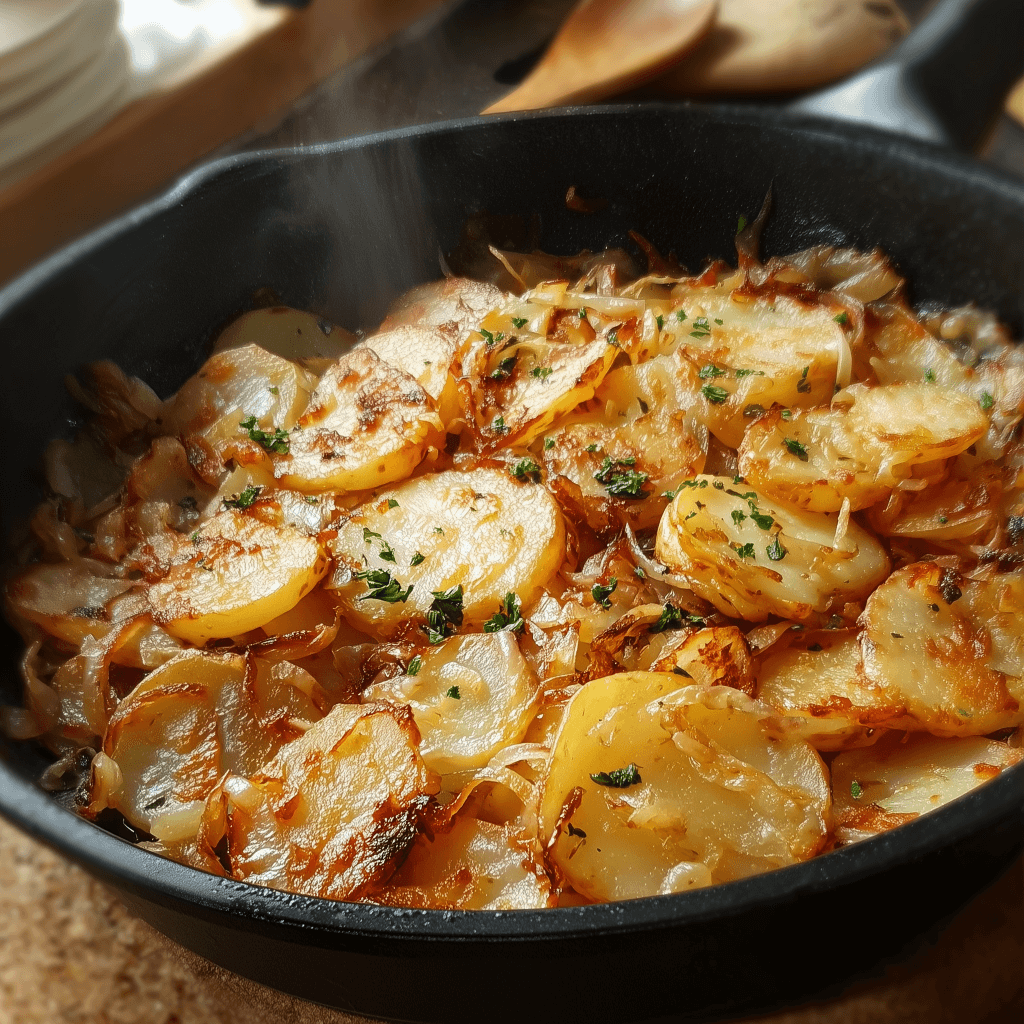
If you’ve ever stood at the stove and watched thin potato slices turn from pale to golden, you already know the pull of this recipe. Fried potatoes with onions are simple, but they don’t taste simple. They taste like comfort. Like the kind of side dish that somehow steals attention from the main course.
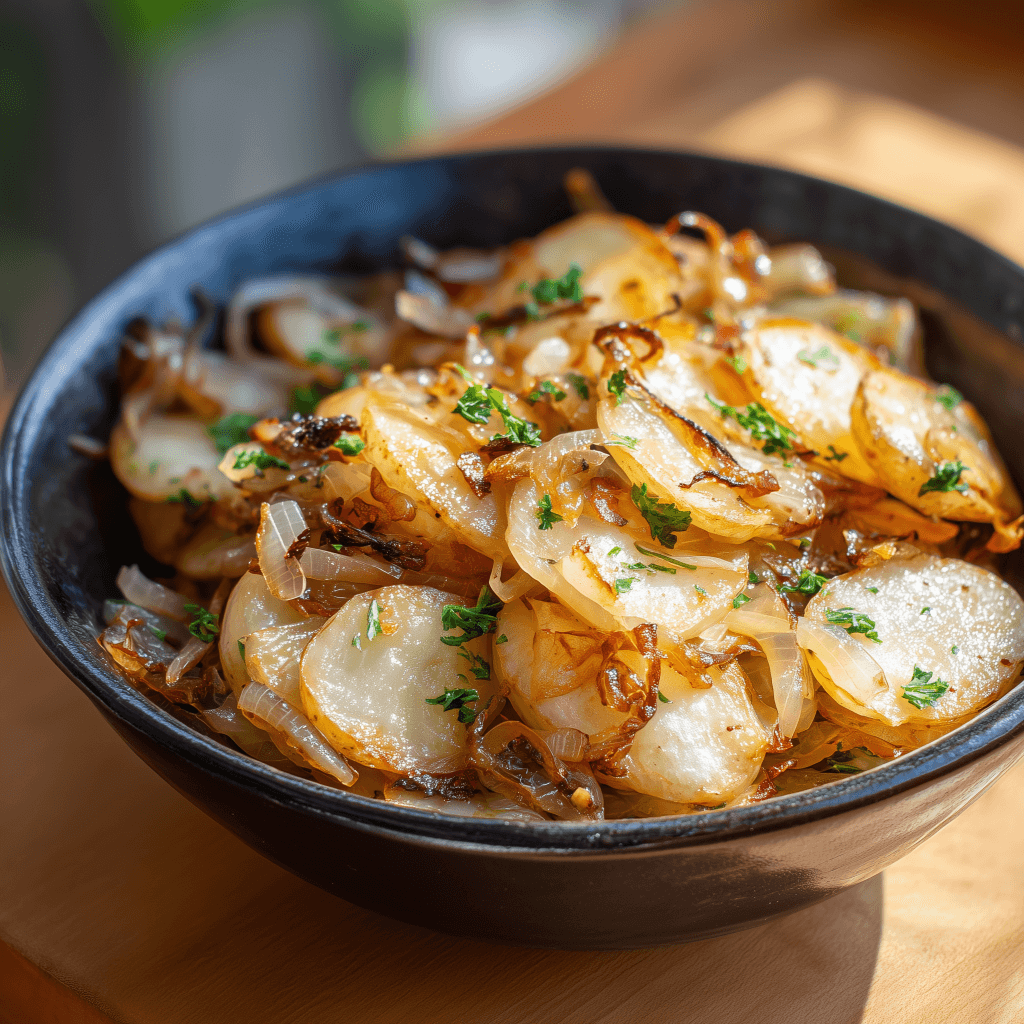
The potatoes get crisp around the edges, soft in the middle, and lightly browned in spots where they kiss the pan. The onions turn sweet and jammy, slipping into the potatoes and leaving little caramelized ribbons behind. Salt, pepper, maybe a pinch of paprika. That’s all it takes to make the whole skillet smell like dinner is about to be very good.
This is also one of those recipes that teaches you something every time you make it. How hot is too hot. When to stir and when to leave it alone. How to keep onions from burning while the potatoes finish cooking. Once you get the rhythm, it’s an easy win.
Ingredients
Here I explain the best ingredients for fried potatoes with onions, what each one does, and substitution options. For the exact ingredient measurements, jump to the recipe card at the bottom of this post.
Potatoes
You can make this recipe with almost any potato, but the texture changes depending on which one you pick.
-
Yukon gold potatoes: creamy centers, great browning, my favorite for an all-purpose skillet potato.
-
Russet potatoes: fluffy inside, very crisp edges, a classic diner-style choice.
-
Red potatoes: hold their shape well and stay a little firmer, great if you like chunkier bites.
You’ll peel them or not depending on your mood. I often leave the skins on Yukon golds and red potatoes. For russets, I usually peel because the skin can feel tougher once fried.
Onions
Onions do more than add flavor here. They change the whole vibe of the skillet.
-
Yellow onions: balanced sweetness and bite, the go-to option.
-
Sweet onions: extra mellow and caramel-like, especially good if you want a softer onion flavor.
-
Red onions: slightly sharper, pretty in the skillet, and great if you like a little more edge.
Slice them thin so they melt into the potatoes instead of sitting in big crunchy chunks.
Fat for frying
You need enough fat to help the potatoes brown and to keep them from sticking.
-
Butter + oil: my favorite combination. Butter brings flavor, oil keeps it from burning too quickly.
-
Bacon grease: adds smoky richness and pairs perfectly with onions.
-
Avocado oil or vegetable oil: neutral, reliable, and good for higher heat.
If your skillet looks dry during cooking, add another tablespoon of oil. Potatoes soak it up.
Seasonings
Keep it simple, then build from there.
-
Salt: start light, adjust at the end.
-
Black pepper: adds warmth and bite.
-
Garlic powder (optional): quick savory boost.
-
Paprika (optional): gives a warm color and gentle flavor.
-
Fresh herbs (optional): parsley, chives, or thyme at the end.
Optional extras
This skillet is easy to personalize.
-
diced bell peppers
-
chopped cooked bacon or sausage
-
minced garlic
-
shredded cheese on top (melt it at the very end)
-
hot sauce or red pepper flakes
Best potatoes to use
If your goal is crisp edges with tender centers, the potato choice matters. Not in a fussy way. Just in a “know what you’re getting” way.
Yukon golds give you the best balance. They soften nicely without falling apart, and the outside browns beautifully. If you want a skillet potato that feels buttery even before you add butter, pick golds.
Russets are the crisp champions. They’ll brown aggressively and feel extra crunchy. The tradeoff is they can break down a bit more, especially if you stir a lot. If you like a looser, hash-brown-ish texture, russets are perfect.
Red potatoes stay firmer and keep their shape. They’re great when you want neat slices or chunks that hold together.
One more thing: slice size changes everything. Thin slices cook faster and brown more easily. Thick slices take longer and can stay firm in the center. I like a slice that’s about ⅛-inch thick for the best texture.
The two-step method that makes crispy potatoes easier
You can fry potatoes from raw, straight in the skillet. It works. It also takes longer, and it can be tricky to get the center tender without over-browning the outside.
That’s why I love a quick two-step approach:
-
Par-cook the potatoes (just enough to soften them)
-
Finish in the skillet to brown and crisp
Par-cooking can be done a few ways:
-
simmering in salted water for 5–6 minutes
-
microwaving with a splash of water for 4–6 minutes
-
steaming briefly
This doesn’t make the recipe complicated. It makes it easier. The potatoes cook through faster in the skillet, and you get better browning without babysitting the pan for a full half hour.
If you want the simplest method with the best results, do the two-step. If you want the classic “all in the skillet” approach, I’ll cover that too.
How to make Fried Potatoes with Onions
For the full detailed recipe instructions and ingredient amounts, scroll to the recipe card at the bottom of this post.
Step 1: Slice the potatoes evenly
Slice potatoes into thin rounds, about ⅛-inch thick. Try to keep them as even as you can so they cook at the same pace.
If you’re leaving skins on, scrub them well. If you’re peeling, peel first, then slice.
Step 2 (recommended): Par-cook the potatoes
Bring a pot of salted water to a boil. Add the sliced potatoes and cook for 5–6 minutes, just until the slices start to feel slightly tender but still hold their shape.
Drain well. Then let the potatoes sit in the colander for a couple minutes so steam can escape. Moisture is the enemy of browning, so this step helps more than you’d think.
No time for boiling? Microwave works:
-
put sliced potatoes in a microwave-safe bowl
-
add 2 tablespoons water
-
cover loosely
-
microwave 4 minutes, stir, then 1–2 minutes more if needed
You’re not cooking them fully. You’re giving them a head start.
Step 3: Heat the skillet
Place a large skillet on the stove over medium-high heat. A cast iron skillet is fantastic here, but any heavy-bottom skillet will work.
Add oil and butter. Let the butter melt and get foamy.
Step 4: Start frying the potatoes
Add the potatoes in an even layer. If your skillet is crowded, cook in two batches. Crowding leads to steaming, and steaming leads to pale potatoes.
Season with salt and pepper right away.
Let them sit for a few minutes without stirring. This is how browning starts. If you stir constantly, the potatoes won’t develop those golden spots.
Step 5: Add onions at the right time
Once the potatoes have started browning and are about halfway tender, add the sliced onions.
This timing matters. Onions cook faster than potatoes, and if they go in too early, they can burn before the potatoes finish.
Stir gently to combine. Keep the heat around medium to medium-high, adjusting as needed. You want sizzle, not smoke.
Step 6: Cook until golden and tender
Continue cooking for 12–16 minutes, stirring occasionally, until:
-
potatoes are tender all the way through
-
onions are soft and lightly browned
-
edges look crisp and golden
If the skillet looks dry, add another tablespoon of oil. If the potatoes are browning too quickly but still firm inside, reduce heat slightly and cover the skillet for 3–4 minutes to help them soften. Then uncover and let them crisp again.
Step 7: Finish and serve
Taste and adjust seasoning. Add garlic powder or paprika if you want extra flavor. Sprinkle with chopped parsley or chives right before serving.
Serve hot. Straight from the skillet is best.
Recipe tips for crisp edges and tender centers
These are the little moves that turn fried potatoes from “fine” into “why are these so good?”
1) Dry potatoes brown better
If you par-cook, drain well and let steam escape. If you don’t par-cook, you can soak sliced potatoes in cold water for 20 minutes to remove some starch, then dry them very well before frying.
Wet potatoes = steamed potatoes. And steamed potatoes don’t crisp.
2) Use enough fat
Potatoes soak up oil. That’s normal. Start with a few tablespoons, then add more if needed during cooking.
A dry skillet leads to sticking and patchy browning.
3) Don’t stir too much
Let the potatoes sit long enough to form browned spots. Then stir. Then let them sit again.
This back-and-forth rhythm is what builds texture.
4) Add onions after the potatoes get going
Onions can burn fast, especially in a hot skillet. Add them once potatoes have already started browning and are partly tender.
If you like very caramelized onions, you can cook onions separately first, then fold them in at the end. That’s a great move when you want deep onion flavor without risking burnt bits.
5) Cover briefly if needed
If potatoes are browning but still firm in the center, cover the skillet for a few minutes. The trapped steam helps soften them.
Then uncover. Always uncover. That’s how you bring the crisp back.
6) Choose the right heat
Medium-high is great for browning, but every stove is different. If the pan starts smoking or the onions darken too quickly, turn it down.
You’re aiming for steady sizzle, not panic heat.
Flavor variations
Fried potatoes with onions are classic for a reason, but you can nudge the flavor in different directions without changing the method.
Garlic and herb
Add 2 cloves minced garlic during the last 2 minutes of cooking, then finish with chopped parsley and a squeeze of lemon. Bright, savory, and perfect with grilled chicken or fish.
Breakfast skillet style
Add cooked crumbled sausage or bacon at the end. Top each serving with a fried egg and a little hot sauce. It feels like a full breakfast plate, even if you’re eating it at night.
Bell pepper and onion
Slice red or green bell peppers and add them when you add the onions. The peppers soften and sweeten, giving you that classic diner hash vibe.
Cajun-spiced
Add a pinch of Cajun seasoning with the salt and pepper. Finish with green onions. This version is especially good with smoked sausage.
Cheesy skillet potatoes
Once potatoes are fully cooked, reduce heat to low and sprinkle shredded cheddar over the top. Cover for 1–2 minutes until melted. Add green onions and serve immediately.
Vinegar finish
A tiny splash of vinegar at the end wakes up the whole skillet. Apple cider vinegar works well. Keep it small. You’re not making pickles. You’re adding brightness.
What to serve with Fried Potatoes and Onions
This side dish fits a lot of meals. It’s hearty enough to anchor a plate, but it also plays well with lighter mains.
Breakfast ideas
-
scrambled eggs or fried eggs
-
omelets
-
breakfast sausage or bacon
-
pancakes or waffles (sweet + savory plates are always a good time)
Lunch and dinner pairings
-
pork chops
-
pan-seared chicken thighs
-
burgers
-
steak
-
grilled sausages
-
roasted veggies and a simple salad if you want something balanced
If you’re serving a crowd, this skillet is also great on a brunch table. It holds well for a bit, and people can scoop what they want.
Storage and reheating
Fried potatoes are best right out of the skillet, while the edges are still crisp. Leftovers still taste good, but reheating matters if you want the texture back.
Refrigerator
Store leftovers in an airtight container for up to 4 days.
Reheat in a skillet (best texture)
Heat a skillet over medium heat, add a small drizzle of oil, and reheat potatoes for 6–8 minutes, stirring occasionally. This brings back browning and crisp edges.
Reheat in the oven
Spread potatoes on a baking sheet and bake at 400°F for 10–12 minutes, stirring once halfway through.
Reheat in the air fryer
Air fry at 380°F for 5–7 minutes, shaking the basket once. This is a great option for bringing back crunch quickly.
Microwave (fastest)
Microwave works, but the potatoes will soften. If you do microwave, give them a quick skillet finish afterward if you can.
Freezing
I don’t recommend freezing fried potatoes with onions. The texture changes a lot after thawing, and they tend to turn grainy or watery.
FAQs
Can I make fried potatoes with onions without par-cooking?
Yes. Slice potatoes thin, use enough oil, and cook longer. Plan on 20–25 minutes in the skillet. Keep the heat at medium so the outside doesn’t over-brown before the center softens.
Why are my potatoes sticking?
A few reasons:
-
the skillet wasn’t hot enough when potatoes went in
-
not enough oil
-
potatoes were wet
-
you tried to flip too early
Let them form a crust before stirring. That crust helps them release from the pan.
How do I keep onions from burning?
Add onions later, lower the heat slightly once they go in, and stir more often after adding onions. If you like very browned onions, cook them separately first and add at the end.
Can I use frozen diced potatoes?
You can. They won’t taste exactly the same as fresh, but they work for a quick version. Cook them in a hot skillet with oil, then add onions once the potatoes start browning. Expect slightly softer texture.
What’s the best skillet for this recipe?
Cast iron is great because it holds heat well and browns beautifully. A heavy stainless steel skillet works too. Nonstick is fine, but browning can be lighter.
Fried Potatoes with Onions
Ingredients
- 2 pounds Yukon gold potatoes or russet/red potatoes, sliced ⅛-inch thick
- 1 large yellow onion thinly sliced
- 2 tablespoons unsalted butter
- 2 tablespoons oil vegetable, avocado, or olive oil
- 1 ½ teaspoons salt start with 1 teaspoon, adjust at the end
- ½ teaspoon black pepper
- ½ teaspoon garlic powder optional
- ½ teaspoon paprika optional
- 2 tablespoons chopped fresh parsley or chives optional, for serving
Instructions
- Slice the potatoes. Slice potatoes into ⅛-inch rounds.
- Par-cook (recommended). Bring a pot of salted water to a boil. Add potatoes and cook 5–6 minutes, until slightly tender but not falling apart. Drain well and let steam dry for 2–3 minutes.
- Heat the skillet. Place a large skillet on the stove over medium-high heat. Add butter and oil. Once butter melts and foams, it’s ready.
- Fry the potatoes. Add potatoes in an even layer. Season with salt and pepper. Cook 4–5 minutes without stirring, then stir and cook another 4–5 minutes, letting potatoes sit between stirs to brown.
- Add onions. Add sliced onions once potatoes are partly tender and starting to brown. Stir to combine.
- Finish cooking. Cook 8–10 minutes more, stirring occasionally, until potatoes are tender and golden and onions are soft and lightly browned. Add a tablespoon of oil if the pan looks dry.
- Season and serve. Taste and adjust salt/pepper. Add garlic powder or paprika if using. Top with parsley or chives and serve hot.
Notes