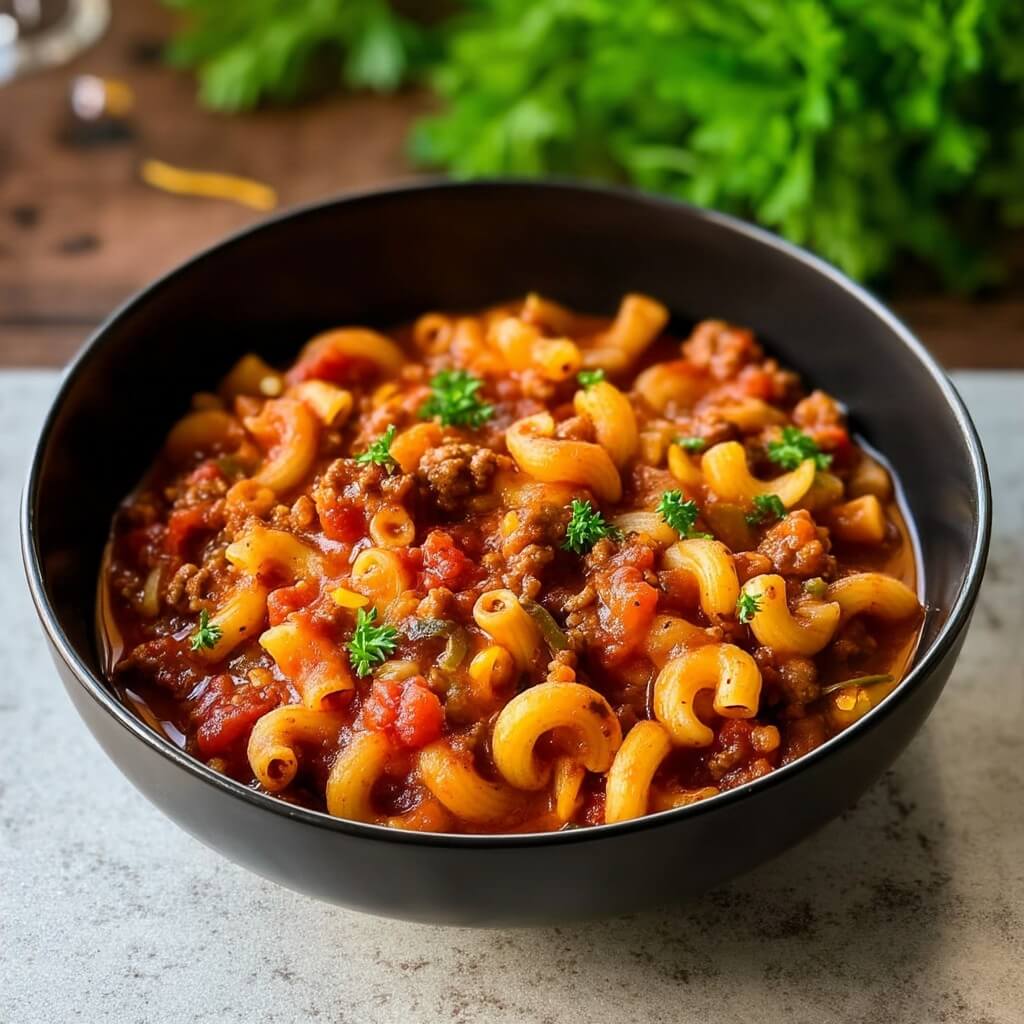
American goulash is the kind of dinner that doesn’t need a special occasion. It shows up when you want something warm and filling, when you want leftovers that taste even better the next day, and when you need a meal that feels familiar the second it starts simmering.
It’s simple food. Ground beef browned until it actually has flavor. Onion and garlic softening in the pot. A tomato-y sauce that’s rich, savory, and just a little tangy. Pasta cooked right in the sauce so everything turns into one cozy bowl.
And that’s the real charm of it. Nothing fussy. No extra steps that don’t matter. Just a big pot of comfort that feeds a crowd, stretches a budget, and gets requested again.
This version keeps the texture right (tender pasta, not mush), builds flavor fast, and gives you options. Want it extra cheesy? Done. Want to sneak in a few veggies? Easy. Want a thicker, scoopable goulash that reheats like a dream? That’s what this is.
Ingredients
I’ve included notes and descriptions below for each ingredient in this recipe. For the exact ingredient measurements, jump to the recipe card at the bottom of this post.
Ground beef
This is the classic base. A little fat helps the flavor and keeps the meat tender.
-
80/20 is ideal for a rich, classic pot.
-
85/15 works great too.
-
If you use very lean beef, add a tablespoon of olive oil when you start cooking so the meat doesn’t taste dry.
Onion
Onion sweetens as it cooks and gives the sauce a deeper, more “finished” flavor. Dice it small so it disappears into the sauce.
Garlic
Garlic goes in after the onion starts to soften. It adds warmth and depth without taking over.
Bell pepper (optional, but good)
A diced green bell pepper is traditional in a lot of American goulash recipes. It adds a subtle sweetness and a little texture.
Not a bell pepper fan? Skip it. The recipe still works.
Tomato paste
Tomato paste is a small ingredient that does a lot. It thickens the sauce and adds a deeper tomato flavor.
A quick minute in the pot before adding liquids makes it taste richer.
Diced tomatoes
Diced tomatoes add texture and a little brightness. I like using a can with juice, since the liquid becomes part of the sauce.
If you prefer a smoother pot, use crushed tomatoes instead.
Tomato sauce
This is the body of the sauce. It helps the goulash taste like a true tomato-based comfort food, not just “beef and pasta.”
Beef broth
Broth gives the pasta something flavorful to cook in. Water works in a pinch, but broth brings more depth.
Low-sodium broth is a smart choice so you can control salt.
Worcestershire sauce
A small splash adds savory depth and makes the beef taste beefier. It doesn’t make the dish taste like Worcestershire. It just rounds things out.
Seasonings
This is where the “goulash” flavor really lives.
-
Italian seasoning gives you an easy blend of herbs.
-
Paprika adds warmth and a subtle smoky note (even if it’s not smoked paprika).
-
Salt and black pepper are essential.
-
Bay leaf is optional, but it adds a quiet background flavor that makes the sauce taste more simmered.
Pasta
Elbow macaroni is the classic pick, and it fits this dish perfectly.
You can also use:
-
small shells
-
rotini
-
cavatappi
-
ditalini
Stick with a short pasta shape that holds sauce.
Cheese (optional, but highly recommended)
Cheddar stirred in at the end makes the sauce creamy and gives the whole pot that extra-cozy finish.
If you want it less cheesy, use a smaller amount. If you want it extra cheesy… you already know what to do.
Ingredient notes and substitutions
This recipe is flexible, which is why it’s so easy to make on a weeknight.
Swap the meat
-
Ground turkey makes a lighter version. Add an extra teaspoon of Worcestershire or a pinch more seasoning.
-
Ground chicken works too, but don’t go too lean.
-
Half beef, half Italian sausage makes the pot extra flavorful. Brown it the same way.
Make it a little spicy
You can add heat without turning it into a completely different dish.
-
¼–½ teaspoon crushed red pepper flakes
-
a pinch of cayenne
-
a few dashes of hot sauce
Start small. You can always add more at the end.
Add vegetables
If you want to stretch the pot or add more texture, these work well:
-
mushrooms (sauté with the onion)
-
zucchini (add near the end so it doesn’t get mushy)
-
corn (stir in at the end)
-
spinach (stir in after turning off heat)
Gluten-free option
Use gluten-free pasta and cook it separately, then stir it in at the end. Gluten-free pasta can turn soft fast if it simmers too long in sauce.
American goulash vs. Hungarian goulash
They share a name, but they’re not the same dish.
Hungarian goulash is more like a stew, often built with chunks of beef, onions, paprika, and a broth-based sauce. It’s hearty and rich, but it’s not usually a pasta dish.
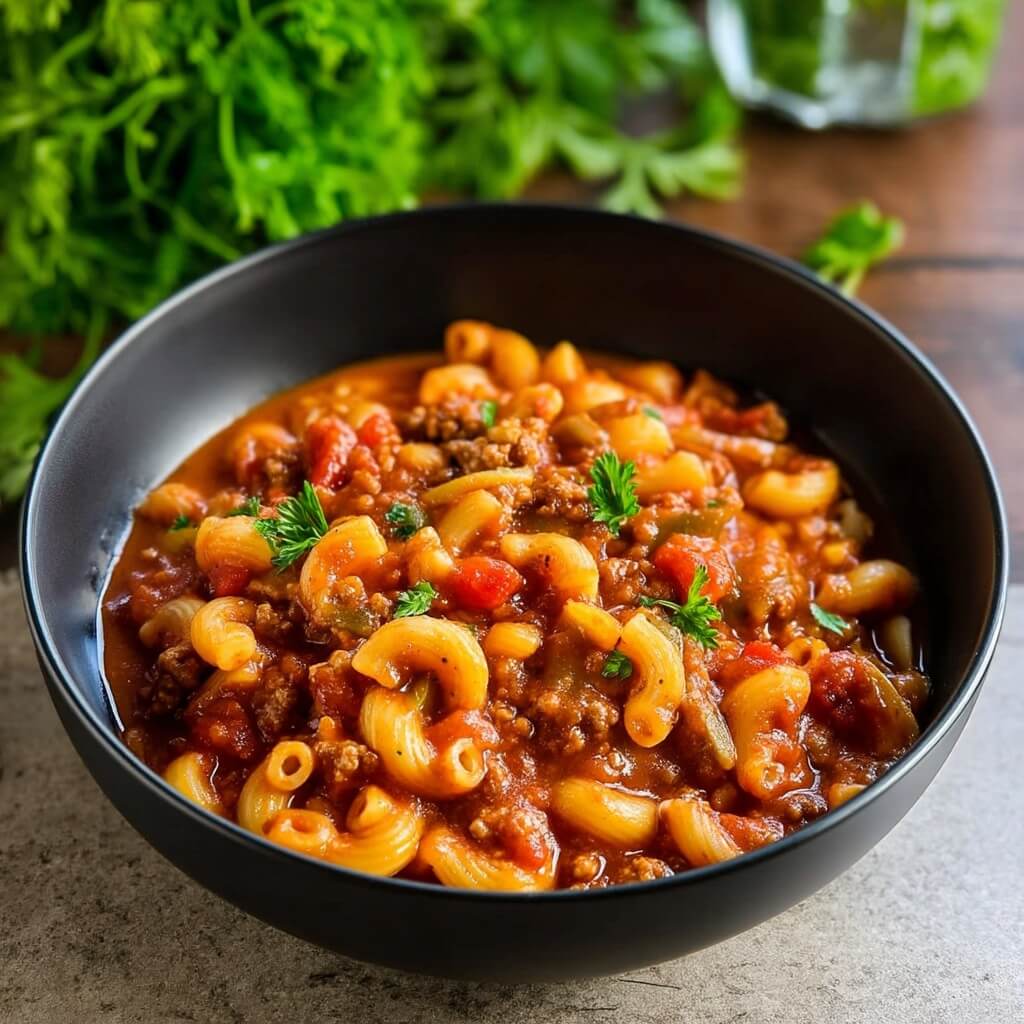
American goulash is its own comfort food category. Ground beef. Tomato sauce. Pasta. It’s a one-pot meal meant to feed a lot of people without a lot of effort.
Different roots. Same goal. A warm bowl that feels like home.
How to make American goulash
This is a straightforward stovetop recipe. One pot. A wooden spoon. You’ll be done before the sink gets scary.
Step 1: Brown the beef
Heat a large Dutch oven (or heavy-bottom pot) over medium-high heat.
Add the ground beef and break it up. Then let it sit for a minute. That’s how you get real browning instead of steamed, gray meat.
Once it has color, stir and keep cooking until the beef is fully cooked. Drain excess grease if there’s a lot, but leave a little behind for flavor.
Season lightly with salt and pepper.
Step 2: Add onion (and bell pepper, if using)
Add the diced onion and bell pepper to the pot.
Cook for 4–5 minutes, stirring occasionally, until the onion softens and turns translucent. Everything should smell like dinner now.
Step 3: Add garlic and tomato paste
Add the garlic and stir for about 30 seconds, just until fragrant.
Add the tomato paste and stir it into the beef and onions. Let it cook for 1 minute. This takes away the “raw” taste and deepens the tomato flavor.
Step 4: Build the sauce
Pour in:
-
diced tomatoes
-
tomato sauce
-
beef broth
-
Worcestershire sauce
Add Italian seasoning, paprika, and a bay leaf if you’re using one.
Stir well. Scrape the bottom of the pot to lift up any browned bits. That’s flavor.
Bring the sauce to a gentle boil.
Step 5: Add pasta
Now you’ve got two good options. Both work. Pick what fits your day.
Two pasta methods (one-pot or stir-in)
Option A: One-pot pasta (classic, easy)
Once the sauce is gently boiling, stir in the uncooked pasta.
Reduce heat to medium-low so it simmers steadily, not aggressively. Cover the pot.
Cook for about 12–15 minutes, stirring every few minutes so the pasta doesn’t stick to the bottom.
When the pasta is tender and the sauce has thickened, you’re ready for the finish.
This is the method that makes the whole pot taste like it belongs together. The pasta absorbs the sauce as it cooks, and you end up with that classic, thick, scoopable texture.
Option B: Cook pasta separately (best for guaranteed texture)
If you really hate the idea of pasta going even slightly soft, cook it separately.
-
Boil pasta in salted water until just al dente.
-
Drain it.
-
Stir it into the finished sauce right before serving.
This method is great if:
-
you plan to reheat leftovers over a few days
-
you’re using gluten-free pasta
-
you want the pasta texture to stay firmer
The flavor is still great. The sauce just won’t be quite as thick from pasta starch.
Finishing touches (the part everyone remembers)
Turn the heat to low.
If you’re adding cheese, stir it in now. Start with 1 cup and see how it looks. Add more if you want it creamier.
Taste the goulash. Adjust salt and pepper. Add a little more paprika if you want extra warmth. If the sauce tastes slightly sharp, a small pinch of sugar can mellow it. Not enough to taste sweet. Just enough to balance.
Remove the bay leaf before serving.
Then scoop it into bowls and serve it hot.
Simple. Cozy. No drama.
Recipe tips
Brown the beef well
This is where your flavor starts. A quick browning step makes the whole pot taste richer. Don’t rush it.
Don’t overcook the pasta
If you use the one-pot method, keep the simmer gentle and stir often. Once the pasta is tender, turn the heat down. Pasta can go from perfect to too soft fast.
Want it thicker?
Let it simmer uncovered for a few minutes after the pasta cooks. The sauce will reduce and thicken.
Want it soupier?
Add an extra splash of broth. This is especially helpful if the pasta absorbs more liquid than expected.
Season in layers
Salt and pepper at the beef stage. Season again when the sauce goes in. Taste again at the end.
That’s how the final pot tastes balanced instead of flat.
Cheese timing matters
Add cheese after the pasta is cooked and the heat is low. High heat can make cheese separate and turn the sauce a little grainy.
Low heat. Gentle stir. Smooth finish.
Optional additions and variations
This dish is a classic for a reason, but it also handles small tweaks really well.
Baked goulash version
If you want a cheesy top:
-
Make the goulash on the stove (pasta cooked).
-
Pour it into a greased baking dish.
-
Top with shredded cheddar or mozzarella.
-
Bake at 375°F for 10–15 minutes, until bubbly.
This turns it into a casserole-style dinner that feels a little extra.
Extra hearty version
Add:
-
1 can kidney beans (rinsed and drained)
-
1 cup corn
-
1 extra cup broth
It becomes a bigger pot, perfect for feeding a crowd.
Creamy tomato version
Stir in:
-
½ cup sour cream
or -
¼ cup heavy cream
Do this at the end on low heat. It turns the sauce softer and creamier, almost like a tomato-cream pasta.
Veggie-boosted version
Sauté diced carrots and celery with the onion. They soften into the sauce and add sweetness without screaming “vegetables.”
A handful of spinach stirred in at the end is also an easy win.
Cheesy jalapeño version
Stir in:
-
a small can of diced green chiles (drained)
-
pepper jack cheese instead of cheddar
Same comfort. A little kick.
What to serve with it
This is a full meal in a bowl, but sides can make it feel like a bigger dinner spread.
-
Green salad with a tangy dressing
-
Roasted broccoli or green beans
-
Garlic bread or buttered bread
-
Simple sautéed zucchini
-
Cucumber salad (fresh and crisp next to the warm pasta)
If you’re feeding kids, keep it simple. A veggie they like and maybe a little fruit on the side.
Storage, reheating, and freezing
American goulash is a leftover champion.
Refrigerator
Store leftovers in an airtight container for up to 4 days.
The sauce thickens as it sits. That’s normal. It’s still delicious.
Reheating
Stovetop: Add leftovers to a saucepan with a splash of broth or water. Reheat over medium-low, stirring often.
Microwave: Reheat in 60–90 second bursts, stirring in between. Add a spoonful of broth if it looks thick.
Freezing
You can freeze it, but texture depends on how you cook the pasta.
-
If you used the one-pot pasta method, the pasta will soften a bit after thawing. Still tasty, just softer.
-
If you want the best texture, freeze the sauce without pasta, then cook fresh pasta when you reheat.
Freeze in airtight containers for up to 3 months.
Thaw overnight in the fridge for the easiest reheat.
Frequently asked questions
Why is my goulash too thick?
Pasta absorbs liquid as it sits, especially in the fridge.
Fix: add a splash of broth while reheating and stir. It loosens right up.
Why is my goulash too thin?
Two common reasons:
-
the pasta didn’t cook long enough to absorb liquid
-
the pot didn’t simmer long enough to reduce
Fix: simmer uncovered for a few minutes. It thickens fast.
Can I make it ahead?
Yes. It’s actually great made ahead.
For the best texture, make the sauce ahead and cook pasta fresh when serving. If you don’t mind softer pasta, make the full pot and reheat gently.
Can I use a different pasta shape?
Absolutely. Stick to short pasta shapes that scoop well. Elbows are classic, but shells and rotini are great too.
Can I double the recipe?
Yes, as long as your pot is big enough. Use a large stockpot or Dutch oven and brown the meat in batches so it browns instead of steaming.
American Goulash
Ingredients
- 2 pounds ground beef 80/20 or 85/15
- 1 medium yellow onion diced
- 1 green bell pepper diced (optional)
- 4 cloves garlic minced
- 2 tablespoons tomato paste
- 1 14.5 oz can diced tomatoes (with juice)
- 2 15 oz cans tomato sauce
- 2 cups beef broth low-sodium preferred
- 2 tablespoons Worcestershire sauce
- 1 tablespoon Italian seasoning
- 2 teaspoons paprika
- 1 bay leaf optional
- 2 teaspoons salt start with 1 ½ tsp, then adjust
- 1 teaspoon black pepper
- 2 cups elbow macaroni uncooked
- 1 –2 cups shredded cheddar cheese optional, to taste
- Optional garnish: chopped parsley grated Parmesan
Instructions
- Heat a large Dutch oven over medium-high heat. Add the ground beef and cook until browned and cooked through. Drain excess grease if needed. Season lightly with salt and pepper.
- Add the onion and bell pepper (if using). Cook 4–5 minutes until softened. Add the garlic and cook 30 seconds.
- Stir in the tomato paste and cook 1 minute.
- Add diced tomatoes, tomato sauce, beef broth, Worcestershire, Italian seasoning, paprika, bay leaf (optional), salt, and pepper. Stir and bring to a gentle boil.
- Stir in the uncooked macaroni. Reduce heat to medium-low, cover, and simmer 12–15 minutes, stirring every few minutes, until pasta is tender and the sauce is thick.
- Remove the bay leaf. Turn heat to low and stir in cheddar cheese (if using). Taste and adjust seasoning. Serve hot.
Notes