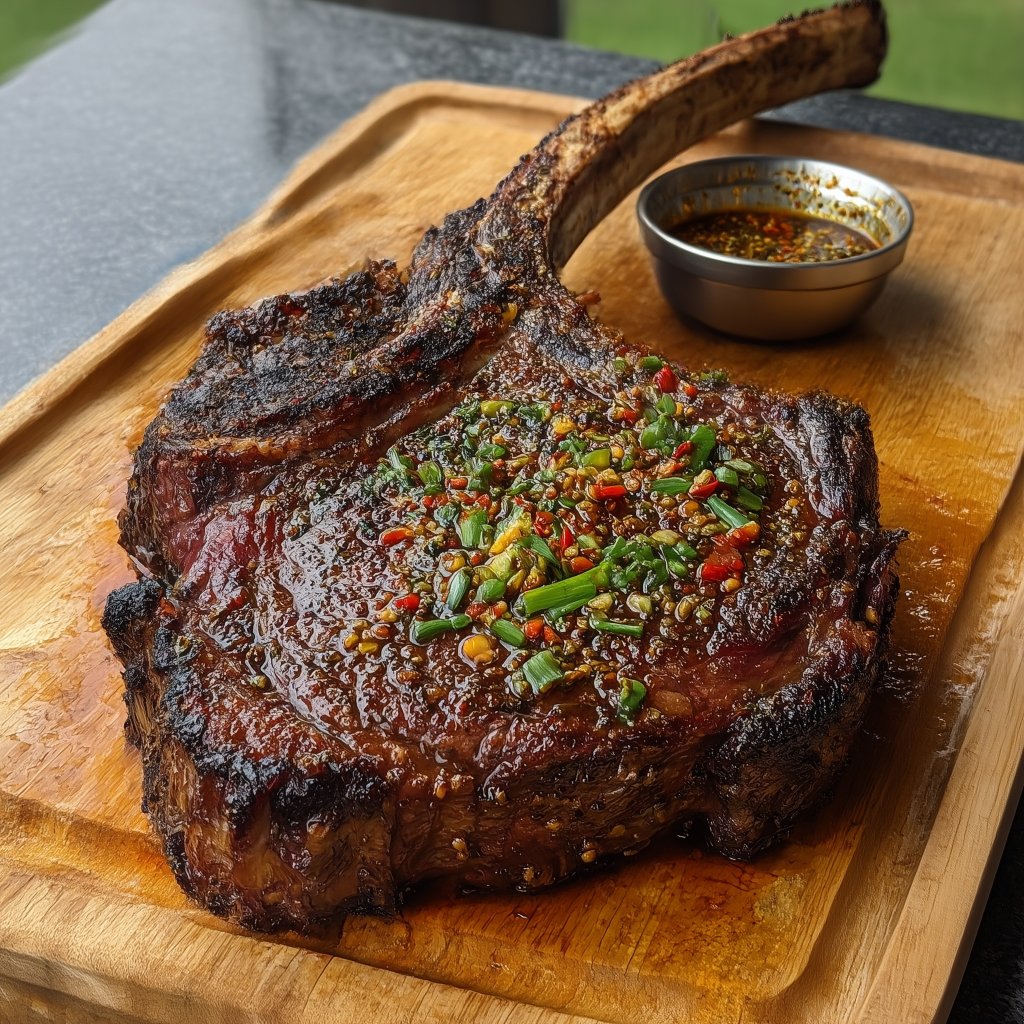
A tomahawk steak is dinner with a little drama built in. Thick cut. Long bone. Big, beefy flavor. It’s the kind of steak that makes the kitchen feel quieter for a minute, because once it hits the heat, everyone starts paying attention.
This spicy garlic version is my favorite way to cook a tomahawk at home. It leans into two things that always work with beef: a salty crust and a warm, garlicky bite that lingers. The heat isn’t wild or sharp. It’s steady. You taste garlic first, then peppery spice, then that rich steak flavor right behind it.
The method matters with a tomahawk because it’s thick. If you blast it over high heat from the start, the outside can overbrown before the center warms through. That’s where the reverse-sear comes in. You cook it low and slow until the interior is almost where you want it, then finish with a hard sear to build that deep browned crust. The result is the best of both worlds: a tender, juicy middle and a crust that tastes like a steakhouse.
This recipe also gives you flexibility. Cook it on a grill if you want smoke. Use a cast iron skillet if you want the strongest crust. Finish with spicy garlic butter so the surface stays glossy and the slices taste rich without needing any sauce at the table.
Why You’ll Love This Recipe
-
Thick steak cooked evenly. Reverse-sear helps the center stay juicy while the outside gets deeply browned.
-
Big flavor without a complicated marinade. A simple spice blend does the work.
-
Spicy garlic butter finish. It melts over the steak and clings to every slice.
-
Works on grill or stovetop. You can cook it with the tools you already have.
-
Leftovers stay delicious. Cold slices are great on salads, sandwiches, or tucked into wraps.
Tomahawk steak can feel intimidating because of the size, but the process is calm once you break it down. Salt the steak. Cook gently. Sear hard. Rest. Slice. That’s the rhythm.
One more thing. This recipe is written for the kind of tomahawk most people buy: about 2 inches thick. If yours is thinner, your cook time will drop. If it’s thicker, it will take longer. A thermometer keeps it simple and saves you from guessing.
Frequently Asked Questions (FAQs)
1) Can I cook this without an oven
Yes. You can do the low-and-slow portion on a grill using indirect heat, then sear over direct heat at the end. You can also do it entirely on a grill if you manage the heat carefully.
2) How spicy is this recipe
It’s medium heat as written. You get warmth and a garlicky kick, not a tongue-scorching burn. For mild, cut the cayenne in half and skip the red pepper flakes in the butter. For hotter, add more cayenne or a pinch of chipotle powder.
3) What internal temperature should I aim for
For the reverse-sear method, pull the steak from the low heat when it’s about 10–15°F below your final target. Then sear and rest. USDA recommends 145°F with a 3-minute rest for whole cuts of beef. Many people prefer lower doneness levels for tenderness and color, so choose what fits your comfort level.
4) Why does my garlic burn when I baste the steak
Garlic burns fast in very hot fat. The fix is simple: sear first, lower the heat slightly, then add butter and garlic for the last minute or two. You want garlic to smell fragrant and mellow, not dark and bitter.
Ingredients
I’ve included notes and descriptions below for each ingredient in this recipe. For the exact ingredient measurements, jump to the recipe card at the bottom of this post.
Tomahawk ribeye steak
This is essentially a bone-in ribeye with the rib bone left long. Look for a steak that’s at least 2 inches thick if you can. Thick steaks are easier to cook evenly using reverse-sear, and they stay juicier.
Marbling matters. A tomahawk with visible fat streaks throughout the meat will taste richer and stay tender.
Kosher salt
Salt does two jobs here. It seasons the steak all the way through, and it helps the surface dry a little so you get a better crust.
If you only have table salt, use less. It’s finer, so it tastes saltier faster.
Black pepper
Freshly cracked pepper has more aroma than pre-ground. It also gives that classic steakhouse edge.
Garlic powder
Garlic powder gives you strong garlic flavor without burning like fresh garlic can during searing. This is the backbone of “spicy garlic” in the dry rub.
Smoked paprika
Smoked paprika brings warmth and color. It also gives a gentle smoky note even if you’re cooking indoors.
Cayenne pepper
This is the heat. Use the amount that matches your spice comfort.
Chili powder
Chili powder adds depth. It rounds out the heat and keeps the flavor from feeling one-note.
Onion powder
A small amount adds savory flavor that plays well with garlic.
Brown sugar (optional, small amount)
This helps browning and adds a subtle sweet balance to the spice. Keep it light. Too much can burn during the sear.
Neutral oil
Avocado oil, canola oil, or vegetable oil work well. You want something that can handle high heat without smoking like crazy.
Spicy garlic butter
This is the finishing move. It makes the steak glossy and rich, and it carries the garlic flavor into every slice.
-
Butter
-
Fresh garlic, minced very fine
-
Red pepper flakes or a pinch of cayenne
-
Chopped parsley (optional)
-
Lemon juice (optional, small squeeze)
Fresh garlic goes into the butter at the end, not at the beginning of the sear. That timing keeps it from burning.
Instructions
I’ve included step-by-step directions below to make this recipe easy to follow at home. For the full detailed recipe instructions and ingredient quantities, scroll to the recipe card at the bottom of this post.
1) Salt the steak
Pat the steak dry with paper towels. Season both sides generously with kosher salt.
For the best result, salt the steak and place it uncovered in the fridge for 8–24 hours. This dries the surface and helps the seasoning penetrate. If you’re short on time, salt it at least 45 minutes before cooking, or right before cooking. The long salt is the best, but the steak will still be delicious either way.
2) Make the spicy garlic rub
In a small bowl, mix black pepper, garlic powder, smoked paprika, chili powder, onion powder, cayenne, and brown sugar if using.
Rub the steak lightly with oil, then coat it with the spice blend on both sides. Press it in so it sticks.
3) Low-and-slow cook
Preheat the oven to 250°F. Place a wire rack on a baking sheet and set the steak on the rack. This lets hot air circulate and keeps the bottom from steaming.
Cook until the internal temperature reaches:
-
110°F for rare
-
115°F for medium-rare
-
125°F for medium
This is the temperature before searing. The sear and rest will raise it.
Depending on thickness, this can take 45 minutes to 1 hour 30 minutes. A thermometer is the easiest way to stay relaxed.
4) Rest briefly before searing
Remove the steak from the oven and let it rest for 10 minutes while you heat the pan or grill. This rest helps the surface dry a little again, which helps crust.
5) Sear hard for a crust
Heat a cast iron skillet over high heat until very hot. Add a small drizzle of oil.
Sear the steak 1–2 minutes per side until deeply browned. Sear the edges too, especially the fat cap side, for 30–45 seconds. That rendered fat adds flavor and helps the crust.
If using a grill, sear over the hottest part of the grill for the same timing.
6) Spicy garlic butter baste
Lower the heat to medium. Add butter to the skillet. When it melts and foams, add minced garlic and red pepper flakes.
Tilt the pan and spoon the butter over the steak for 30–60 seconds. Keep it moving. You want the garlic to smell sweet and fragrant, not dark.
Turn off the heat. Add parsley and a small squeeze of lemon juice if using.
7) Rest, then slice
Move the steak to a cutting board and rest 10–15 minutes.
To slice, cut the meat away from the bone first. Then slice the steak against the grain into thick strips. Spoon any leftover spicy garlic butter over the slices.
Choosing the right tomahawk steak
Not all tomahawks are the same. A few small details make cooking easier and the final steak better.
Thickness
Aim for 2 inches thick or more. Thin tomahawks exist, but they’re harder to cook evenly because the sear finishes the steak too fast.
Marbling
Look for visible fat streaks throughout the ribeye portion. Marbling melts as it cooks, keeping the meat juicy and tender.
Trim
A little fat cap is good. Thick hard fat chunks that won’t render can be trimmed slightly, but don’t over-trim. Fat is flavor.
Bone length
Long bone looks impressive, but it doesn’t change the cook much. It does make handling easier in the pan or on the grill, since it acts like a built-in handle.
Salt timing and why it matters
Salt is not just surface seasoning. With thick steak, timing changes texture.
If you salt 8–24 hours ahead
The salt pulls moisture to the surface, then the steak reabsorbs it along with seasoning. The surface dries slightly, which means better browning later. This is the sweet spot.
If you salt right before cooking
The salt sits on the surface and starts pulling moisture out immediately. That moisture can slow browning. It still tastes great, but the crust can take longer to develop.
If you salt 45–60 minutes ahead
You get a small head start. The steak begins to reabsorb moisture and seasoning. This is a solid middle option when you didn’t plan a day ahead.
This is why the recipe mentions a longer salt window. It’s a simple habit that pays off.
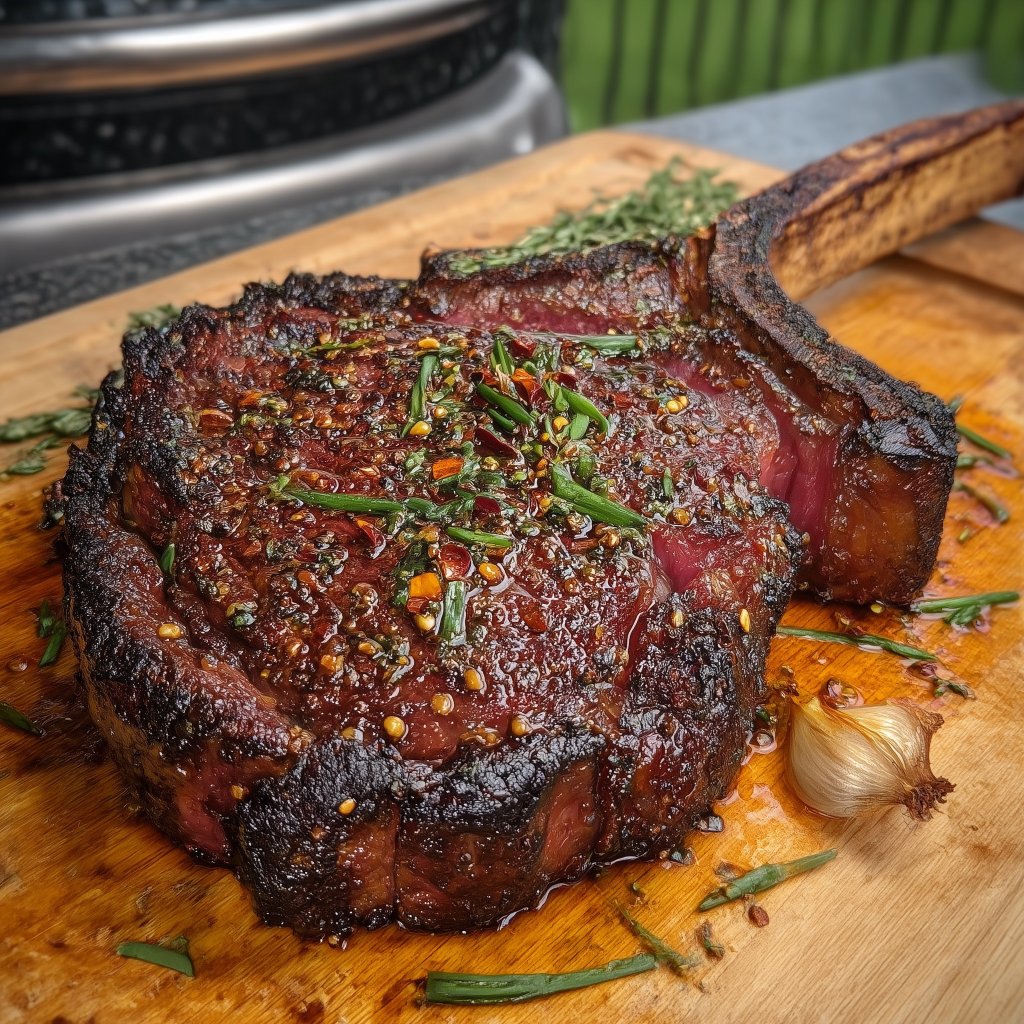
Reverse-sear method explained
Tomahawk steaks are thick enough that they behave differently than a thin steak. High heat from the start can overbrown the outside while the center stays cool. Reverse-sear avoids that.
-
Low heat warms the steak gently and evenly.
-
High heat at the end builds crust quickly.
-
The center stays tender and evenly cooked instead of having thick gray bands.
It also makes timing easier. You’re watching internal temperature, not guessing based on minutes per side.
Grill method option
If you want smoke flavor, the grill version is excellent. The steps are similar.
1) Set up two-zone heat
One side of the grill should be hot for searing. The other side should be cooler for indirect cooking.
2) Cook indirectly
Place the steak on the cooler side, lid closed, until it reaches the same internal temperatures listed above for the oven step.
3) Sear over direct heat
Move the steak to the hot side and sear 1–2 minutes per side, plus edges.
4) Finish with garlic butter
You can baste with butter in a skillet on the grill, or melt the spicy garlic butter separately and spoon it over the steak after searing.
If you’re using open flames, be careful with butter. It can flare. A small cast iron pan on the grill makes this easy.
Spicy garlic butter tips
This butter is simple, but timing matters.
-
Add garlic after the sear, once the pan heat drops slightly.
-
Mince garlic very fine so it softens fast.
-
Keep basting brief. You’re seasoning the surface, not frying garlic.
If you want a deeper garlic flavor without risking burn, stir in a tiny pinch of garlic powder along with the fresh garlic. It boosts flavor quickly.
For a sharper heat, use crushed red pepper flakes plus a pinch of cayenne. For a smoky heat, add a pinch of chipotle powder.
How to slice a tomahawk steak
Slicing well is part of what makes a tomahawk feel special at the table.
-
Let it rest. This helps the juices stay in the meat.
-
Cut along the bone to remove the ribeye portion in one piece.
-
Turn the meat and slice against the grain into thick strips.
-
Spoon spicy garlic butter over the slices.
If you slice too soon, juices spill out and the meat can taste drier. That short rest is not extra. It’s part of the cook.
What to serve with it
A tomahawk steak is rich, so sides that bring freshness or crunch work well.
Classic steakhouse-style
-
roasted potatoes or mashed potatoes
-
sautéed mushrooms
-
crisp green salad with a tangy dressing
-
grilled asparagus or green beans
Bright and fresh
-
cucumber salad
-
tomato and onion salad
-
lemony arugula salad
-
roasted broccoli with a squeeze of lemon
Comfort sides
-
mac and cheese
-
baked potatoes
-
buttery corn
-
garlic bread
Keep it simple. The steak is doing plenty.
Storage, reheating, and leftovers
Refrigerator
Store leftovers in an airtight container for up to 4 days.
Best way to reheat
Gentle heat keeps steak tender.
-
Oven: place slices in a baking dish with a spoonful of broth or leftover butter. Cover and warm at 275°F until just heated.
-
Skillet: warm slices on low heat with a small pat of butter. Keep it gentle and brief.
Microwaving works, but it can toughen steak quickly. If you use the microwave, do short bursts and stop early.
Easy leftover ideas
-
thin slices in a sandwich with mustard and pickles
-
chopped steak in scrambled eggs
-
steak salad with a crisp dressing
-
steak tacos with onions and cilantro
-
steak fried rice with garlic and scallions
Cold steak eaten straight from the fridge is not a crime, especially when the spice rub is good.
Recipe notes
-
A thermometer makes thick steak simple. Use it.
-
Pull the steak from low heat 10–15°F before your final target. Sear and rest finish the job.
-
For the cleanest crust, keep the steak surface dry. Pat it dry before seasoning and before searing if needed.
-
Fresh garlic burns fast. Add it at the end with butter and lower heat.
Spicy Garlic Tomahawk Beef Steak
Ingredients
Steak
- 1 tomahawk ribeye steak 2.5–3.5 lb, about 2 inches thick
- 1 ½ teaspoons kosher salt plus more as needed
- 1 teaspoon black pepper
- 2 teaspoons garlic powder
- 1 teaspoon smoked paprika
- 1 teaspoon chili powder
- ½ teaspoon onion powder
- ¼ to ½ teaspoon cayenne pepper to taste
- 1 teaspoon brown sugar optional
- 1 tablespoon neutral oil avocado, canola, vegetable
Spicy garlic butter
- 4 tablespoons unsalted butter
- 3 garlic cloves minced very fine
- ½ teaspoon red pepper flakes or a pinch of cayenne
- 1 tablespoon chopped parsley optional
- 1 teaspoon lemon juice optional
Instructions
- Pat the steak dry. Season with kosher salt on both sides. For best results, refrigerate uncovered 8–24 hours, then bring to cool room temperature for 30–45 minutes before cooking.
- Mix pepper, garlic powder, paprika, chili powder, onion powder, cayenne, and brown sugar (optional). Rub steak with oil, then press seasoning blend onto both sides.
- Preheat oven to 250°F. Place steak on a wire rack over a baking sheet. Cook until internal temp reaches 110°F (rare), 115°F (medium-rare), or 125°F (medium).
- Rest steak 10 minutes while heating a cast iron skillet over high heat. Add a small drizzle of oil.
- Sear steak 1–2 minutes per side until deeply browned. Sear edges 30–45 seconds.
- Lower heat to medium. Add butter. When melted and foamy, add minced garlic and red pepper flakes. Baste steak for 30–60 seconds. Turn off heat, stir in parsley and lemon juice if using.
- Rest steak 10–15 minutes. Remove meat from bone, slice against the grain, and spoon spicy garlic butter over the slices.
Notes